 EN
EN  العربية
  Български
  Čeština
  Dansk
Dansk  Deutsch
  Ελληνικά
  Español
  Suomi
Suomi  Français
  עברית
עברית  हिन्दी
  Bahasa Indonesia
  Italiano
  日本語
日本語  한국어
한국어  Bahasa Melayu
  Nederlands
  Norsk
Norsk  Polski
  Português
  Română
  Русский
  Svenska
  Kiswahili
  ไทย
ไทย  Türkçe
  Українська
  Tiếng Việt
  中文
中文 The Boutique Hotel Order That Turned My Online Store into a B2B Business
By Carmen Rivera, Online Store Owner — San Diego, CA
I launched Coastal Provisions in 2018 — a Shopify store selling artisan pantry goods sourced from small California producers. Sea salts, specialty honeys, California olive oils, dried citrus, hand-packed sardines. Curated gift sets for the sort of person who reads food magazines. I was doing about $4,200 a month, entirely retail, entirely direct-to-consumer.
In early 2020, the purchasing manager at a boutique hotel group in La Jolla emailed. They were putting together welcome amenity kits for their rooms — could I supply them?
The order was for 240 units at $42 per kit. $10,080.
I had no idea how to invoice a hotel purchasing department.
The B2B Invoice Problem
My Shopify store was set up for consumer checkout — credit card at purchase, automated confirmation email, retail pricing. The hotel purchasing manager needed a formal invoice with their PO number, net-30 payment terms, and my business tax ID. The Shopify order confirmation I sent her was not going to work.
I went down a two-hour rabbit hole trying to figure out how to create a professional B2B invoice outside of Shopify. I tried Google Docs templates, a web-based invoicing service that required a subscription I didn’t want, and eventually downloaded InvoiceFlow. I had the invoice built in twenty minutes.
Wholesale Order — [Company Name] — [PO Number] — [Date]:
- Customer: [Hotel Group Name] | Purchasing contact: [Name, email]
- Billing address: [Address] | Ship-to address: [Hotel address]
- PO Number: [PO-2026-0044]
Items:
- Coastal Provisions Welcome Amenity Kit — Standard (quantity: 240)
- Unit contents: 1 sea salt tin + 1 raw honey 2oz + 1 olive oil 100ml + 1 dried citrus + 1 sardine tin
- Unit price: $42.00
- Extended: 240 × $42.00 = $10,080.00
- Subtotal: $10,080.00
- Shipping: $185.00 (freight, addressed to receiving dock)
- Order total: $10,265.00
- Payment Terms: Net-30
- Tax: Resale certificate on file — no tax applied
- Bank transfer instructions: [Included]
The “resale certificate on file” line was something I’d never thought about before. Wholesale buyers who resell products don’t pay sales tax on the purchase — they collect it at point of sale. Getting their resale certificate on file before processing the first wholesale order is essential.
Building the Wholesale Pricing Structure
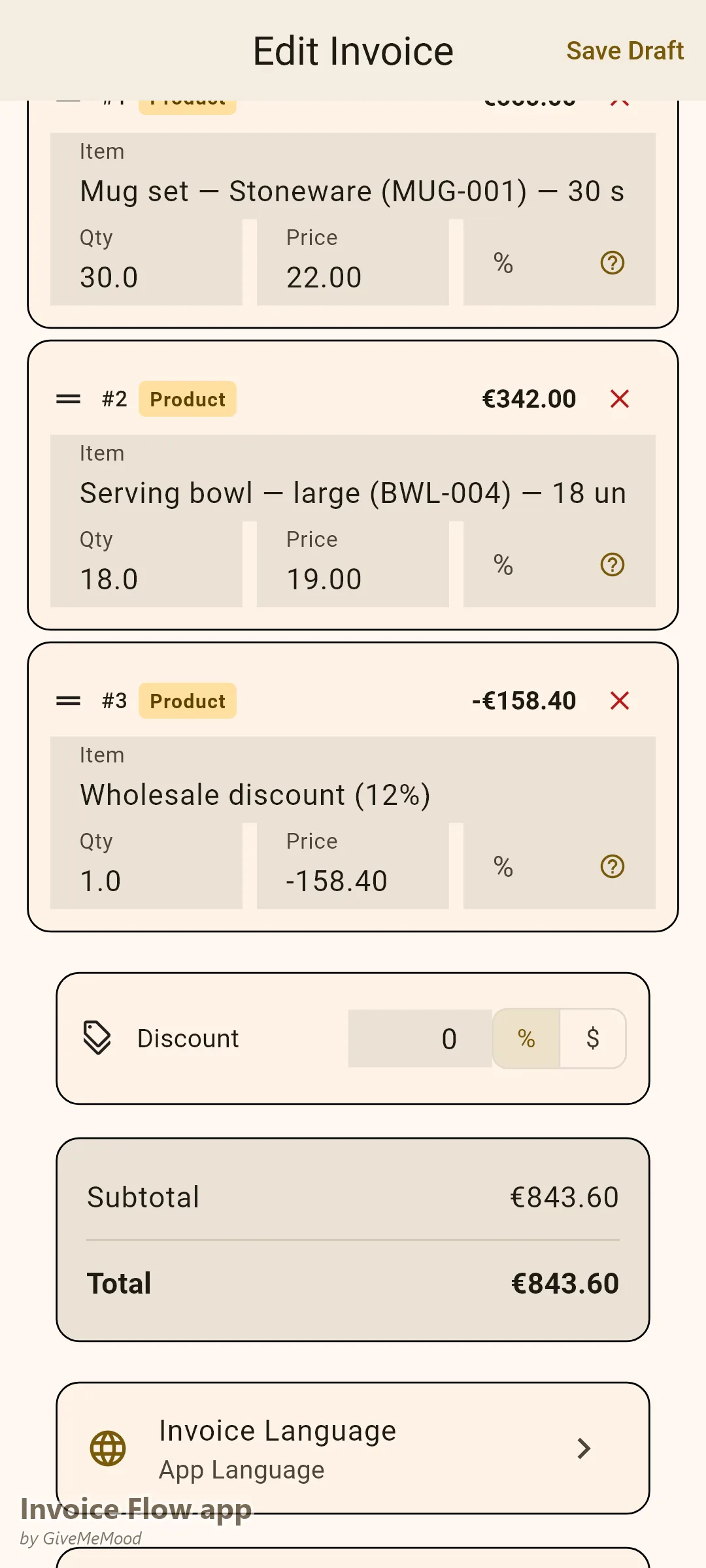
After the hotel order, I formalized a wholesale pricing tier. Retail prices on my site are full margin. Wholesale pricing for resellers is a discount from retail — typically 40–50% off.
My pricing tiers:
- Retail (direct-to-consumer via Shopify): Full price — e.g., $28.00 for the Sea Salt Collection
- Wholesale (verified reseller, min 12 units/item): 40% off retail — $16.80/unit
- Distribution (buying group or distributor, min 100 units/item): 50% off retail — $14.00/unit
I built a separate wholesale invoice template in InvoiceFlow for each tier. When I onboard a new wholesale account, I ask for their resale certificate, set up a customer profile with their tier and payment terms, and generate invoices from the appropriate template.
Recurring Wholesale Account Invoices
The hotel group placed a standing quarterly order — the same amenity kit configuration, adjusted for seasonal product availability. I set up a recurring quarterly invoice in InvoiceFlow.
Quarterly Wholesale Order — [Account Name] — [Quarter]:
- Customer: [Hotel Group] | Account #: [####]
- PO Number: [PO-####]
- Order type: Standing quarterly amenity kit resupply
Items:
- Welcome Amenity Kit — Standard (quantity: [N]): [N] × $42.00 = $[amount]
- Welcome Amenity Kit — Premium (quantity: [N]): [N] × $68.00 = $[amount]
- Subtotal: $[total]
- Shipping: $[amount]
- Order total: $[total]
- Payment Terms: Net-30
- Resale certificate: On file (expires [date])
The quarterly structure gave me predictability. Twelve weeks of inventory planning instead of one week.
Custom Gift Set and Corporate Order Invoices
The second major B2B channel was corporate gifting — companies ordering customized gift sets for clients, employees, and holiday programs.
Corporate Gift Order — [Company Name] — [Date]:
- Order: [Description — Holiday Client Gift Program / Employee Appreciation / Client Welcome]
- Quantity: [N] sets
- Configuration:
- [Item 1] (quantity per set: 1): unit cost $[X] × [N] sets = $[amount]
- [Item 2] (quantity per set: 1): unit cost $[X] × [N] sets = $[amount]
- [Custom branding/packaging] (if applicable): $[setup fee] + $[per-unit rate] × [N] = $[amount]
- Product subtotal: $[total]
- Custom packaging and branded ribbon: $[amount]
- Shipping and handling: $[amount]
- Order total: $[total]
- Deposit (50%, due at order confirmation): $[deposit]
- Balance (due before shipment): $[balance]
- PO Number: [PO-####]
- Estimated ship date: [Date]
Corporate gift orders use a 50% deposit because I’m sourcing and packaging products specifically for the order. If the client cancels after I’ve pulled inventory and assembled kits, I have no path to recover those costs.
Net-30 vs. Credit Card: Managing Wholesale Receivables
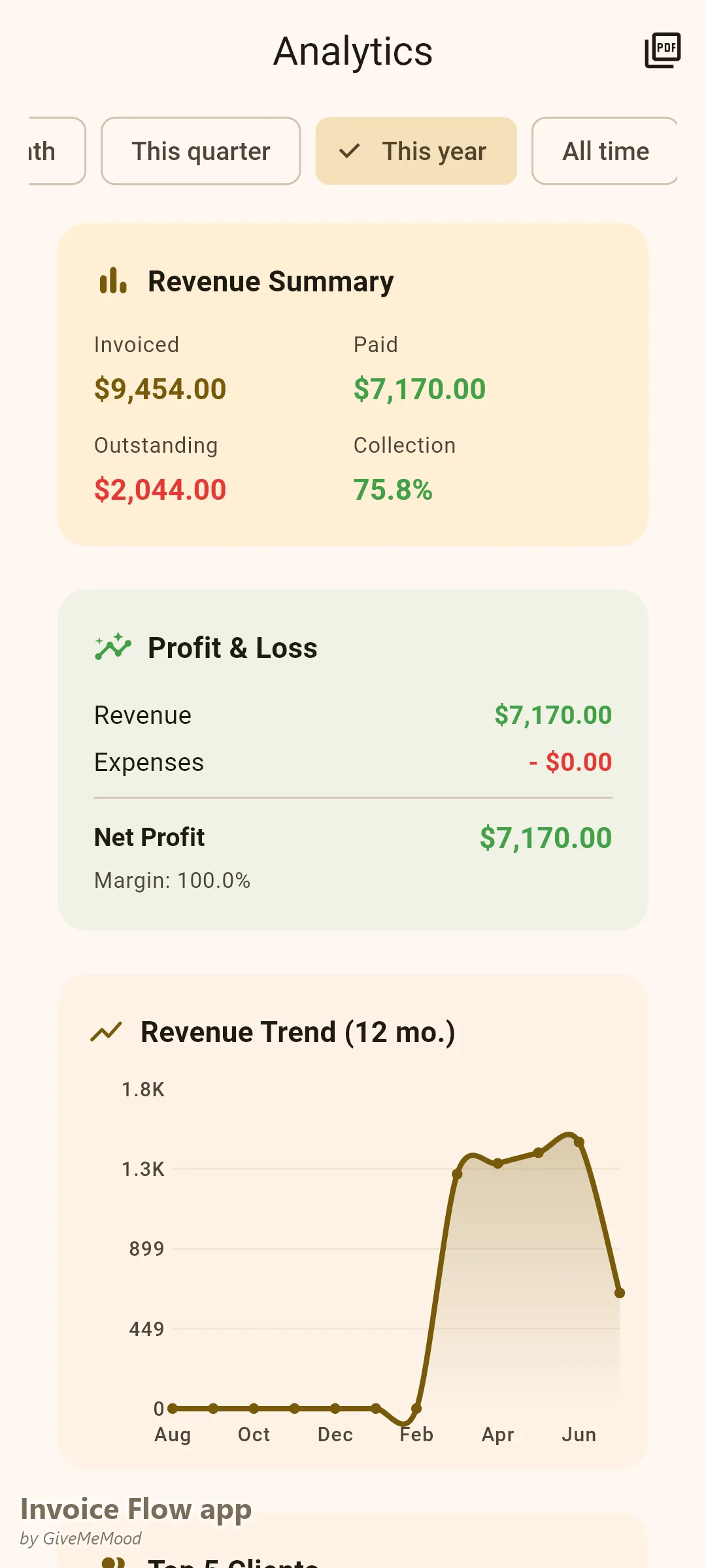
After the hotel order, I offered net-30 to all wholesale accounts by default. That was a mistake.
Six months in, I had $18,400 in outstanding wholesale receivables. Several accounts were at 45–60 days. One account had placed three orders and paid none of them within terms.
I restructured:
- New wholesale accounts (first three orders): 50% deposit + balance before shipment
- Established accounts (12+ months, consistent payment history): Net-30
- Distribution/buying group accounts: Net-45 with signed distributor agreement
The first-three-orders rule eliminated most late payment problems. By the time an account is on open net-30 terms, I’ve seen them pay on time at least three times.
The Business Five Years In
Current revenue breakdown:
- Direct-to-consumer (Shopify): approximately $11,400/month
- Wholesale accounts (hotel groups, specialty retailers): approximately $14,600/month
- Corporate gift programs (seasonal peaks): approximately $6,800/month (higher in Q4)
- Monthly subscription boxes (48 subscribers): $3,840/month
- Total monthly revenue: approximately $36,640/month
In 2018, before B2B, I was doing $4,200/month. The B2B channels now represent about 69% of revenue.
What InvoiceFlow Does for Online Store Owners
Online store B2B billing spans wholesale account invoices with resale certificates and net-30 terms, standing order invoices for recurring accounts, corporate gift orders with deposit structures, and subscription box recurring billing. InvoiceFlow handles all of these from one Android app — separate templates for retail, wholesale, and distribution pricing tiers, PO reference fields for corporate clients, deposit tracking for custom orders, and net terms that match each account type.
Download InvoiceFlow. Build the wholesale invoice template with PO field, resale certificate note, and net-30 terms. Build the corporate gift template with the deposit structure. The hotel account that orders quarterly is worth more than a month of retail sales — and it starts with a professional B2B invoice.
Carmen Rivera is the owner of Coastal Provisions in San Diego, California, selling artisan pantry goods direct-to-consumer, to wholesale hotel and retail accounts, and through corporate gift programs and subscription boxes.