 EN
EN  العربية
  Български
  Čeština
  Dansk
Dansk  Deutsch
  Ελληνικά
  Español
  Suomi
Suomi  Français
  עברית
עברית  हिन्दी
  Bahasa Indonesia
  Italiano
  日本語
日本語  한국어
한국어  Bahasa Melayu
  Nederlands
  Norsk
Norsk  Polski
  Português
  Română
  Русский
  Svenska
  Kiswahili
  ไทย
ไทย  Türkçe
  Українська
  Tiếng Việt
  中文
中文 When the Boutique Said Yes and I Had No Invoice
By Fiona Walsh, Handmade Crafts Seller — Burlington, VT
I make ceramic vessels. Mugs, bowls, vases, small sculptural pieces. I’ve been throwing pottery since 2014 — first as a hobby in a shared studio, then as a side income selling at Vermont craft fairs, then as a full-time practice starting in 2019.
The craft fair model has a ceiling. You can only do so many weekends, and weekend sales are weather-dependent, traffic-dependent, and exhausting. I was making about $2,400/month at my peak fair season — good for late summer and fall, slow from January to April.
The shift came when a home goods boutique in downtown Burlington reached out. A customer had photographed my mug at a fair and tagged the boutique on Instagram. The boutique owner wanted to carry my work.
I was thrilled. Then she asked: “Do you do wholesale or consignment?”
I had never thought about either. I didn’t know the difference.
Wholesale vs. Consignment: The Billing Difference
Wholesale: the retailer buys your products outright at a wholesale discount (typically 40–50% off retail). They own the inventory. They pay you regardless of whether the items sell.
Consignment: your products sit in the retailer’s shop; you get paid only when items sell, at a percentage of the sale (typically 50–60% to you, 40–50% to the shop). The retailer owns nothing until sale.
Both have billing implications.
The Burlington boutique wanted to start with consignment — she wasn’t sure how my work would sell in her store and didn’t want to commit to a wholesale buy. I agreed.
Within three months, everything I’d consigned had sold. She reordered on consignment again. By month five, she offered to switch to wholesale.
The consignment billing was the part that took work to get right.
Consignment Settlement — [Retailer Name] — [Month]:
- Settlement period: [Start date] – [End date]
- Consignment inventory on hand at period start: [N] pieces (see attached inventory log)
- Items sold this period:
- Mug — Forest Series (4): retail price $48 × 60% to maker = $28.80/piece × 4 = $115.20
- Vase — Celadon (2): retail price $95 × 60% to maker = $57.00/piece × 2 = $114.00
- Bowl — Salt Glaze (3): retail price $62 × 60% = $37.20/piece × 3 = $111.60
- Total sales this period: $340.80
- Consignment inventory on hand at period end: [N] pieces (see attached)
- Remittance: Due within [N] days of settlement
The inventory log attached to the settlement invoice — tracking what’s in the shop at any time — is essential for consignment. Without it, you’re relying entirely on the retailer’s honesty about what sold.
The Wholesale Invoice (After She Converted)
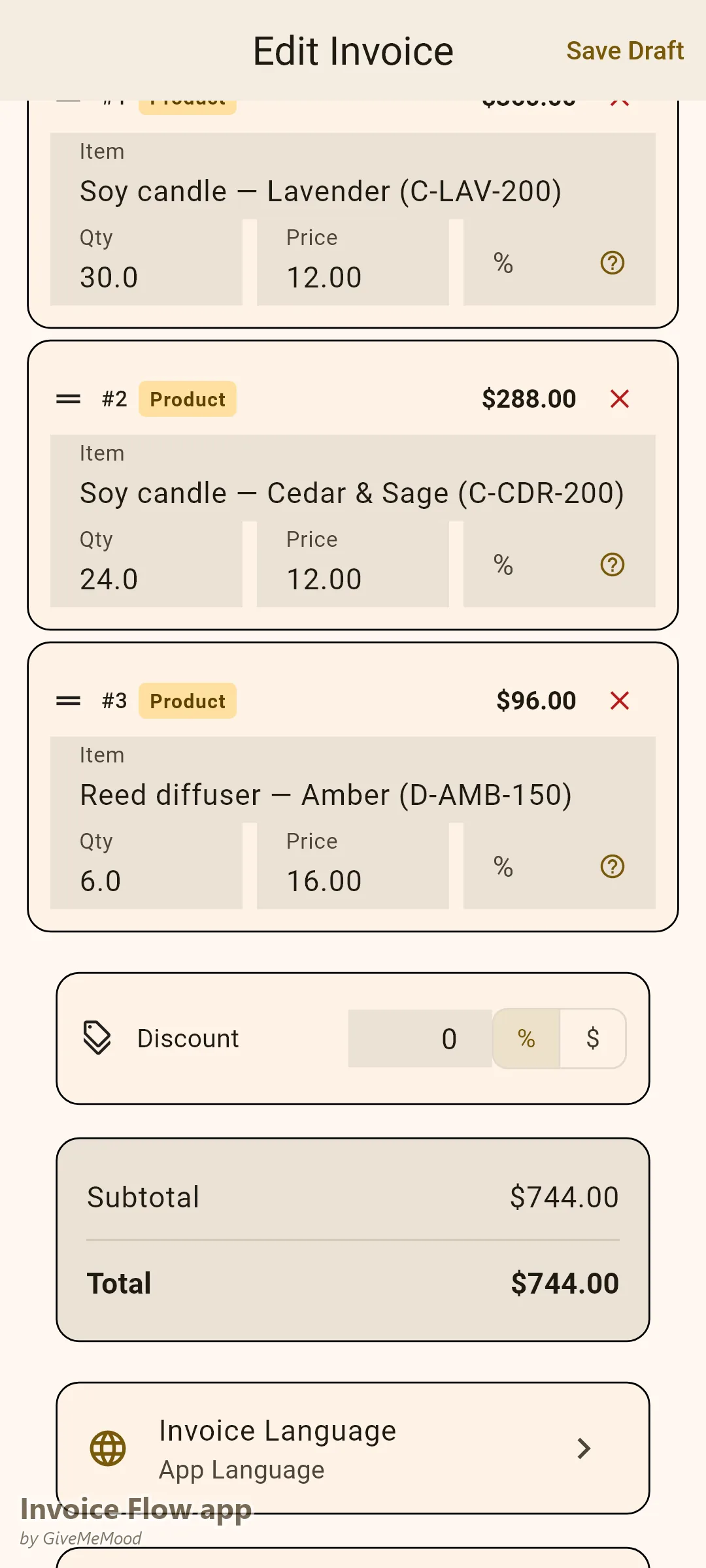
Once the boutique converted to wholesale, billing became simpler and more predictable.
Wholesale Order — [Retailer Name] — [Date]:
- Account: [Boutique name] | PO Number: [PO-####]
- Resale certificate: On file
Items:
- Mug — Forest Series (qty: 12): wholesale price $22.00 × 12 = $264.00
- Vase — Celadon (qty: 6): wholesale price $45.00 × 6 = $270.00
- Bowl — Salt Glaze (qty: 8): wholesale price $28.00 × 8 = $224.00
- Small Sculpture — Abstract (qty: 4): wholesale price $55.00 × 4 = $220.00
- Subtotal: $978.00
- Shipping: $45.00
- Order total: $1,023.00
- Payment Terms: Net-30
- Note: Wholesale pricing assumes items will be retailed at no less than 2.1× wholesale (minimum advertised price policy)
The MAP (minimum advertised price) note on the invoice protects my retail pricing. If a wholesale account sells my mugs at $18 (below what I sell them for direct), it undercuts my own store. MAP policy prevents this.
Custom Commission Invoices
A portion of my revenue comes from custom commissions — wedding gifts, memorial pieces, interior design projects.
Custom Commission — [Client Name] — [Date]:
- Commission: [Description — e.g., set of 8 dinner plates, custom glaze, client’s chosen color palette]
- Specifications: [Dimensions, glaze, finish, quantity, delivery date]
- Design consultation: Included
- Estimated completion: [Date range]
- Commission fee: $[amount]
- Rush surcharge (if applicable): $[amount] (completion within [N] weeks)
- Total: $[total]
- Deposit (50%, non-refundable, due at order confirmation): $[deposit]
- Balance (due at completion, before shipment): $[balance]
- Cancellation: Deposit non-refundable. Commission may be offered for general sale if cancelled after production begins.
The cancellation note about offering the piece for general sale matters for pottery specifically. A custom glaze combination I developed for one client might not sell easily elsewhere — but a commission for a standard glaze I use regularly can absolutely be sold. Clients who understand this cancel less often.
Craft Fair Retail Receipts
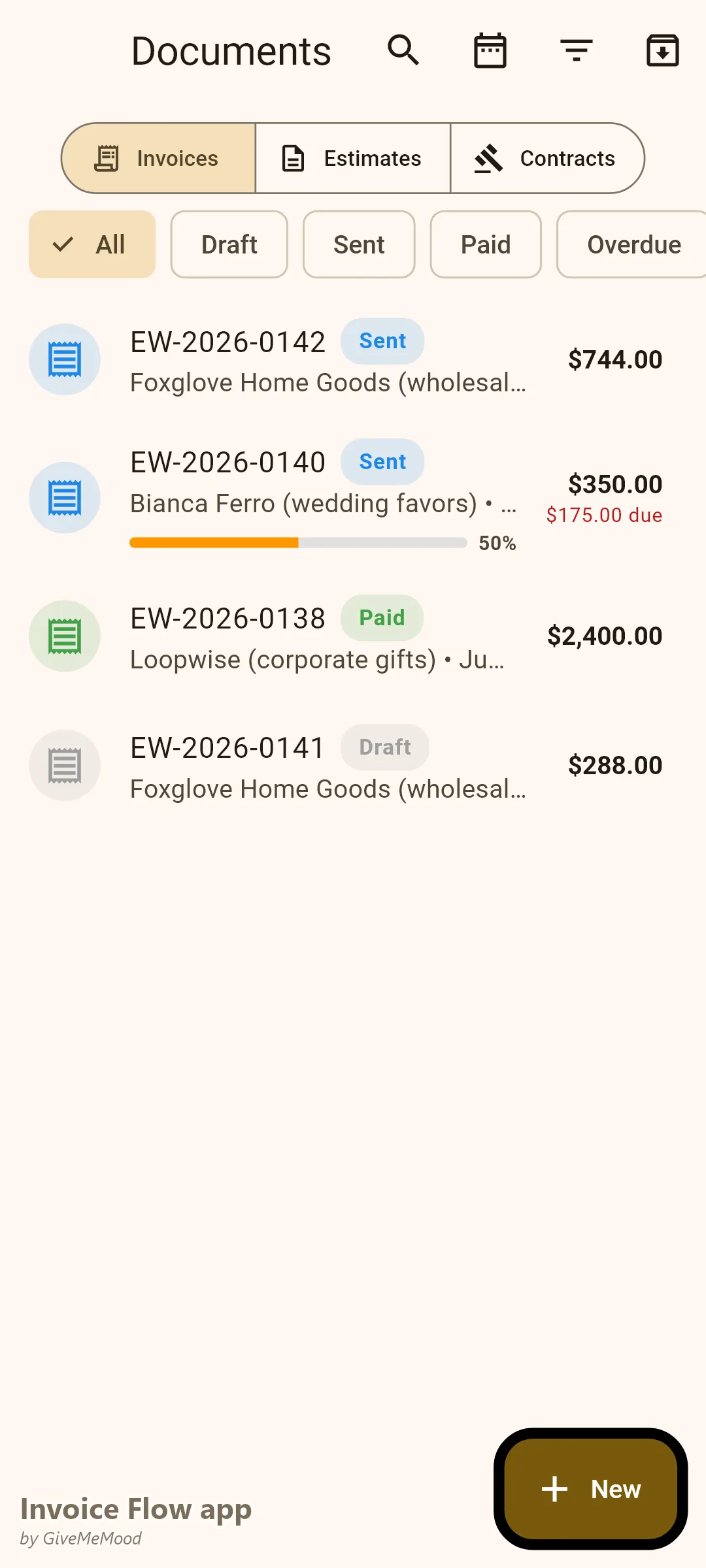
Craft fair sales are cash and card. But some customers — particularly interior designers and corporate buyers — need a receipt for expense purposes.
Retail Receipt — [Studio Name] — [Date]:
- Event/Location: [Craft fair name, city]
- Items:
- Total: $[total]
- Payment: [Cash / Card]
- Note: Handmade ceramic ware — [Studio name], Burlington, Vermont
InvoiceFlow generates these on the spot from a mobile template. I send them to the customer’s email before they leave the booth.
Online Sales and Etsy/Platform Invoices
Most online marketplace sales don’t require a separate invoice — the platform provides confirmation. But for buyers who need a formal invoice (international buyers with customs requirements, business buyers), InvoiceFlow generates one quickly.
Online Sale Invoice — [Customer Name] — [Date]:
- Platform: [Etsy / Website] | Order #: [Platform order number]
- Item: [Description]
- Price: $[amount]
- Shipping: $[amount]
- Total: $[total]
- Note: Invoice for customs/expense reporting. Platform transaction is the authoritative record.
The Business Six Years In
Current revenue breakdown:
- Wholesale accounts (3 boutiques): $1,023 + $840 + $620 = $2,483/month average
- Online sales (Etsy + website): approximately $2,100/month
- Custom commissions (3–5/month): approximately $2,400/month
- Craft fairs (spring and fall seasons): approximately $1,800/month average (higher in season)
- Corporate and interior design wholesale: approximately $900/month
- Total monthly revenue: approximately $9,683/month
When I was doing craft fairs only, I was making $2,400/month in peak season and much less in winter. The wholesale accounts gave me income regardless of season.
What InvoiceFlow Does for Handmade Craft Sellers
Handmade craft seller billing spans consignment settlement invoices with inventory tracking, wholesale orders with MAP policy and net-30, custom commission deposits with cancellation terms, craft fair retail receipts, and online platform supplemental invoices. InvoiceFlow handles all of these from one Android app — separate templates for each billing type, deposit tracking for commissions, and the professional format that retail buyers and corporate clients expect.
Download InvoiceFlow. Build the consignment settlement template with the inventory log reference. Build the wholesale template with MAP policy note and net-30 terms. Add the deposit and cancellation policy to custom commission invoices. The boutique account that reorders wholesale every quarter is the income that gets you through slow fair seasons.
Fiona Walsh is the owner of Walsh Ceramics in Burlington, Vermont, selling handmade ceramic work at craft fairs, online, through wholesale retail accounts, and by custom commission.