 EN
EN  العربية
  Български
  Čeština
  Dansk
Dansk  Deutsch
  Ελληνικά
  Español
  Suomi
Suomi  Français
  עברית
עברית  हिन्दी
  Bahasa Indonesia
  Italiano
  日本語
日本語  한국어
한국어  Bahasa Melayu
  Nederlands
  Norsk
Norsk  Polski
  Português
  Română
  Русский
  Svenska
  Kiswahili
  ไทย
ไทย  Türkçe
  Українська
  Tiếng Việt
  中文
中文 Why I Left the Insurance Billing System and What I Built Instead
By Rachel Thornton, DPT — Portland, OR
I spent four years as a staff physical therapist at a large orthopedic practice. I was good at the clinical work. I was terrible at tolerating the billing.
The practice submitted claims to 14 insurance companies. Each had its own fee schedule, its own denial logic, its own prior authorization requirements. We had a full-time biller and a part-time appeals coordinator. Average reimbursement per visit: $72 after write-offs. Average time to collect: 47 days.
In 2021, I opened my own cash-pay practice. No insurance contracts. No prior authorizations. No 47-day collection cycle. Every patient either paid at the time of service or was on a prepaid package.
That first year I saw 14 patients a week and collected $134,400. The practice I’d left was seeing 28 patients a week and netting approximately the same after billing overhead, write-offs, and staff costs.
The billing structure was the difference.
The Cash-Pay PT Invoice
Cash-pay practices charge transparent, published rates. Patients pay at time of service — no claims, no waiting, no surprises.
Physical Therapy Session — [Patient Name] — [Date]:
- Provider: Rachel Thornton, DPT | NPI: [XXXXXXXXXX]
- Service date: [Date] | Duration: [N] min
- Service: [Initial evaluation / Follow-up session / Specialized treatment]
- CPT code: [97001 / 97110 / 97014 / etc.]
- Session rate: $[amount]
- Payment: Paid at checkout (card / QR / payment link shown on invoice)
I collect at checkout via the method shown on the invoice. No invoicing after the fact.
Superbills for Out-of-Network Reimbursement
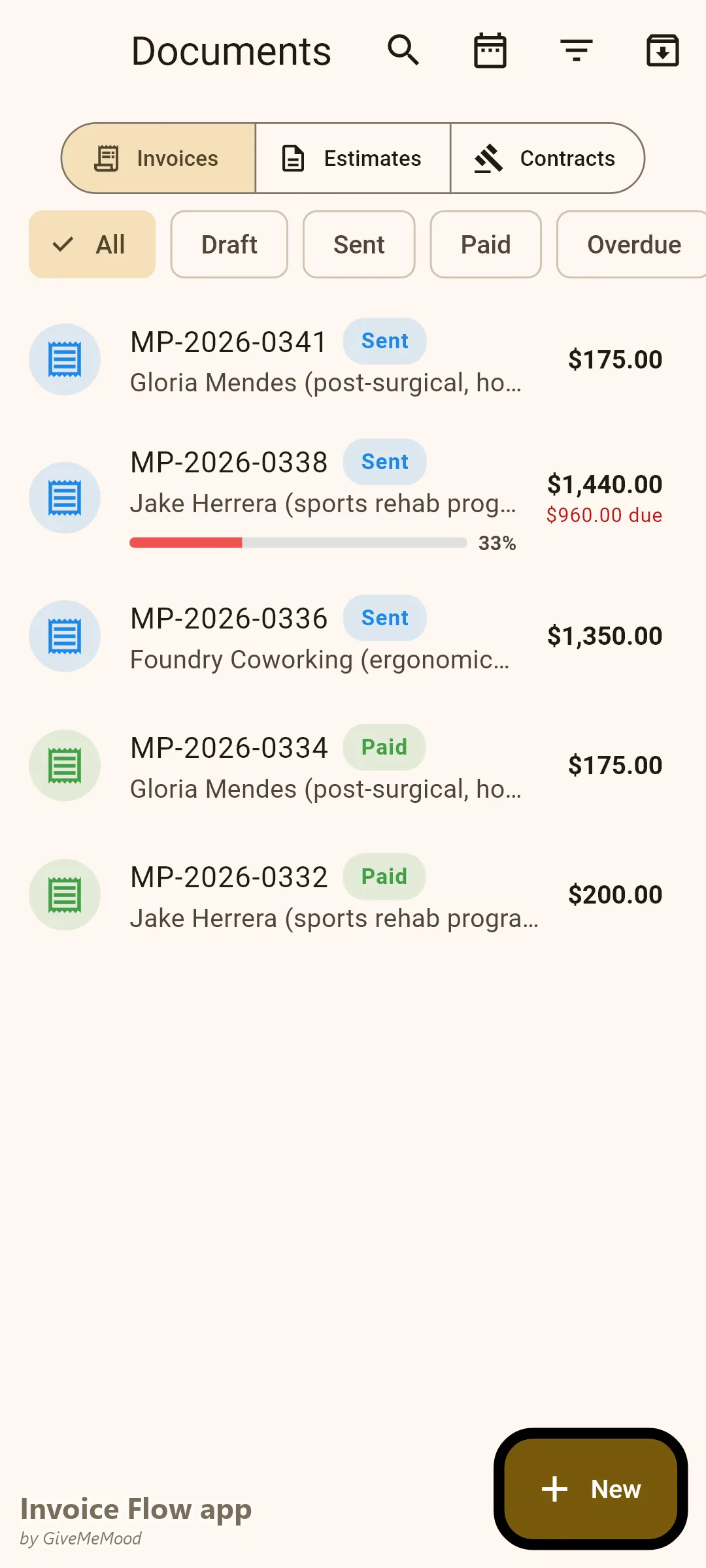
Cash-pay doesn’t mean patients can’t seek out-of-network reimbursement from their insurance. Most of my patients with commercial insurance submit to their plans and get 40–70% reimbursement. I provide a superbill with every session.
Superbill — [Patient Name] — [Date of Service]:
- Provider: Rachel Thornton, DPT | NPI: [XXXXXXXXXX] | Tax ID: [XX-XXXXXXX]
- Practice address: [Address]
- Service date: [Date]
- Diagnosis code (ICD-10): [M54.5 — Low back pain / M75.1 — Rotator cuff tear / etc.]
- Procedure code (CPT): [97001 — PT evaluation / 97110 — Therapeutic exercise / etc.]
- Units: [N] (CPT 97110, 97140 are billed in 15-min units)
- Fee charged: $[amount]
- Amount paid by patient: $[amount]
- Balance due: $0.00 (paid in full)
I auto-generate the superbill in InvoiceFlow at checkout and email it directly. Patients use it to submit to their insurance. Many tell me their out-of-pocket cost after reimbursement is comparable to what they’d pay with a $50 copay at an in-network practice.
Prepaid Session Packages
Packages are the highest-revenue model for cash-pay PT. Patients pay upfront for a set number of sessions, I discount slightly, and everyone wins: the patient saves money and commits to the protocol; I collect before I provide the service.
PT Session Package — [Patient Name] — [Date]:
- Package: [Starter 5-session / Standard 10-session / Recovery 15-session]
- Session type: [60-min / 45-min / specialized]
- Package rate: $[amount] (saves $[amount] vs. per-session)
- Payment: Paid at enrollment (card / QR / payment link shown on invoice)
Package sessions don’t expire for 6 months. Any unused sessions at expiration convert to account credit.
Package Tier Structure
- Starter (5 sessions): Best for acute single-issue treatment. $[amount]
- Standard (10 sessions): Typical post-surgical or chronic condition protocol. $[amount]
- Recovery (15 sessions): Complex rehab or performance optimization. $[amount]
Each package saves the patient $[amount] vs. paying per-session. The savings create the enrollment incentive; the commitment creates better clinical outcomes because patients complete the protocol.
Corporate and Employer Wellness Contracts
The second major revenue channel I built was direct employer contracts. Several Portland-area companies with large desk worker populations wanted on-site or near-site PT services as an employee benefit — injury prevention, ergonomic assessments, and early intervention for musculoskeletal complaints.
Corporate Wellness Services — [Company Name] — [Month Year]:
Billing Period: [Month Year]
- On-site ergonomic assessments: [N] employees × $[rate] = $[total]
- On-site PT sessions (injury prevention / early intervention): [N] sessions × $[rate] = $[total]
- Monthly ergonomic consultation and reporting: $[amount]
- Invoice total: $[total]
Remit to: Rachel Thornton, DPT | EIN: [XX-XXXXXXX] PO Number: [PO-####] Payment Terms: Net-30 W-9 on file
The employer contracts pay net-30 without the insurance company denials, audits, or write-offs. Three corporate accounts pay approximately $7,200/month combined — billed the 1st of each month, collected by the 30th.
Wellness and Performance Programs
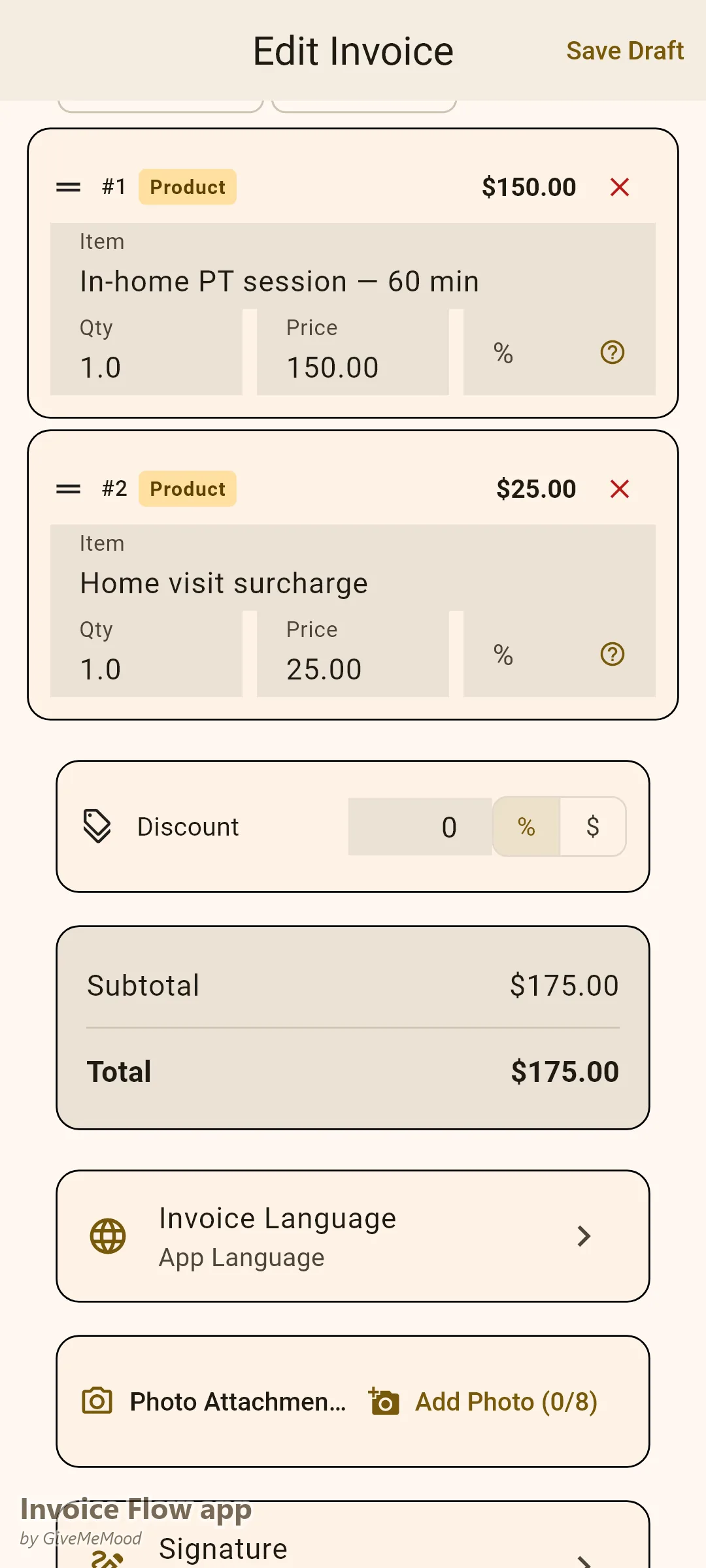
Beyond traditional PT, I run injury prevention and performance programs for recreational athletes and wellness-focused adults.
Wellness Program — [Program Name] — [Client Name] — [Date]:
- Program: [Runner’s Injury Prevention / Desk Worker Mobility / Athletic Performance]
- Duration: [N] weeks | Format: [Individual / Small group (3–5)]
- Sessions: [N] × [N] min
- Program rate: $[amount]
- Payment: [Paid in full / Installments: $[amount] × [N] months]
Out-of-State Telehealth Invoices
I see telehealth patients in states where I hold licensure. The invoice documents the telehealth nature of the service.
Telehealth PT Session — [Patient Name] — [Date]:
- Provider: Rachel Thornton, DPT | NPI: [XXXXXXXXXX]
- Service type: Telehealth — synchronous video
- Patient location: [State]
- Provider license: [State license # where applicable]
- Service date: [Date] | Duration: [N] min
- CPT code: [97110 / 97140 / etc.] + modifier [95 — telehealth]
- Session rate: $[amount]
- Payment: Paid via the method shown on the invoice
Telehealth PT is billed with modifier 95. I note the patient’s state and my applicable license on the superbill for their records.
Four Years Out of the Insurance System
Current monthly revenue:
- In-person cash-pay sessions: approximately $8,400/month
- Corporate employer wellness contracts (3 companies): approximately $7,200/month
- Prepaid packages: approximately $4,600/month (new package enrollments)
- Performance and wellness programs: approximately $3,200/month
- Telehealth sessions: approximately $1,800/month
- Total monthly revenue: approximately $25,200/month
This is 14–18 patients per week. Not 28.
The cash-pay model isn’t for every practice or every patient population. But if you’re doing the clinical work and the insurance system is eating 30–40% of your revenue in write-offs and billing overhead, it’s worth modeling out.
Download InvoiceFlow. Build your session template with CPT codes and superbill format. Set up package templates with upfront payment. Add EIN and PO field to your corporate wellness template. Every patient leaves your practice with a professional invoice they can submit to their insurance.
Rachel Thornton is a Doctor of Physical Therapy in Portland, Oregon, running a cash-pay physical therapy practice serving individual patients, corporate employer wellness accounts, and performance-focused programs.