 EN
EN  العربية
  Български
  Čeština
  Dansk
Dansk  Deutsch
  Ελληνικά
  Español
  Suomi
Suomi  Français
  עברית
עברית  हिन्दी
  Bahasa Indonesia
  Italiano
  日本語
日本語  한국어
한국어  Bahasa Melayu
  Nederlands
  Norsk
Norsk  Polski
  Português
  Română
  Русский
  Svenska
  Kiswahili
  ไทย
ไทย  Türkçe
  Українська
  Tiếng Việt
  中文
中文 The Corporate Lunch Account That Changed My Food Truck Business
By Marcus Chen, Food Truck Owner — Austin, TX
I started Wok & Roll in 2018 with a 20-foot truck, a Taiwanese street food menu, and a spot at a weekend farmers market. By 2020 I was doing four to five service days per week — lunch spots at construction sites and business parks, weekend markets, the occasional festival. Revenue was consistent but the ceiling was clear: I could only be in one place at a time, and I could only serve as many customers as could queue in a lunch hour.
The breakthrough came in 2021, when a software company about a mile from my regular Tuesday lunch spot called and asked if I’d cater their weekly all-hands lunch. 80 employees, every Thursday, same menu. They wanted to pay monthly with a corporate card.
That was the moment I realized I’d been thinking about my business entirely wrong.
From Street Sales to Corporate Accounts
The software company was my first corporate lunch account. They paid $1,400 per Thursday service — $1,200 in food plus $200 service fee for early arrival and setup. Monthly invoice: approximately $5,600 for four Thursdays.
That one account was equal to three of my best regular service days — guaranteed, every month, with one invoice. No weather uncertainty. No slow queue days. No competing with the Thai truck that showed up at my Tuesday spot and killed my lunch hour sales.
I spent the next six months building the billing infrastructure to get more corporate accounts. InvoiceFlow was a significant part of that.
The Corporate Catering Account Invoice
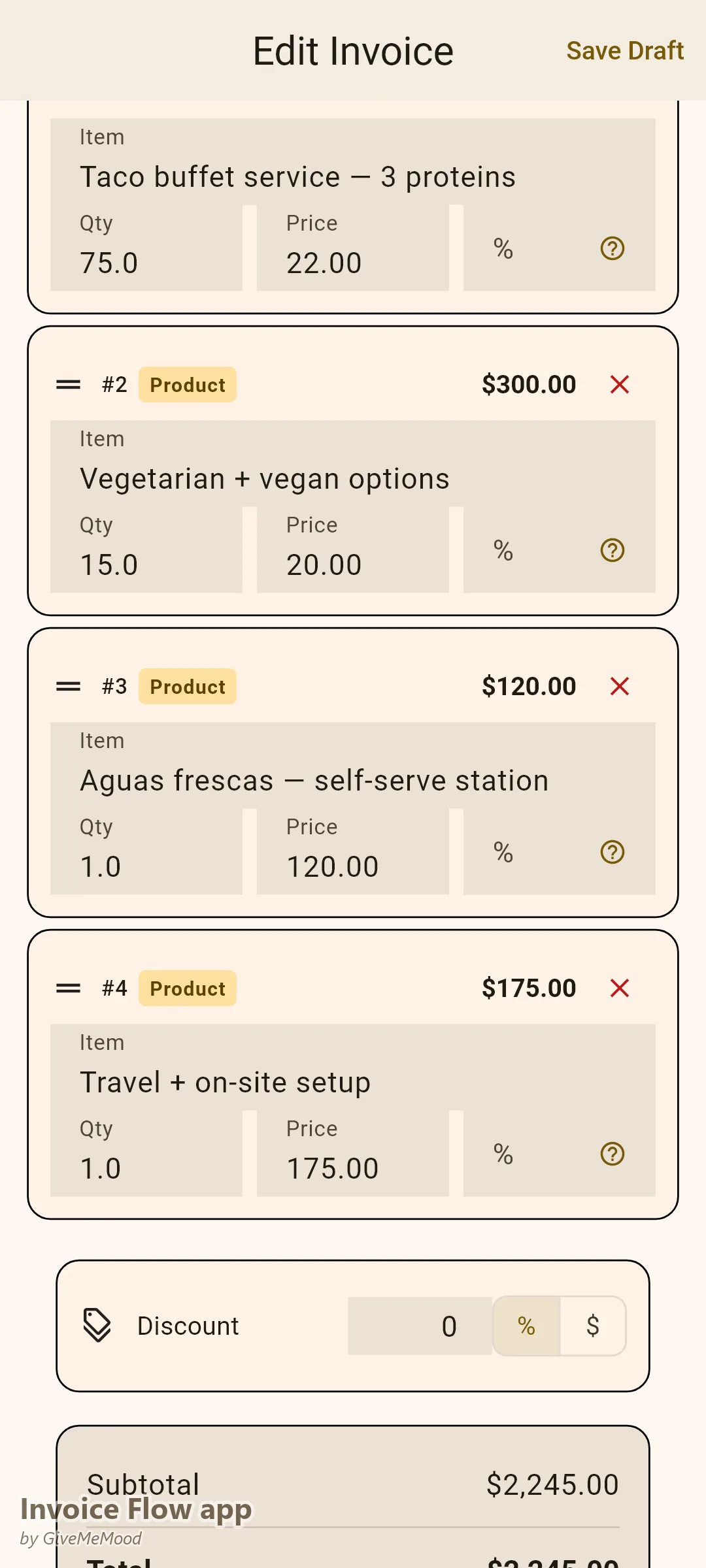
Corporate clients expect a professional invoice with company information, PO reference, and clear itemization. When the software company’s finance team asked me to set up as a vendor and send invoices — not Square receipts — I had to build the format they needed.
Corporate Catering — [Company Name] — [Month Year]:
- Service: Weekly Corporate Lunch — All-Hands Thursday Service
- Schedule: [List service dates — e.g., April 3, 10, 17, 24]
- Menu: Rotating Taiwanese street food menu (confirmed 48 hours prior)
- Guest count: Approximately 80 employees
- Per-service pricing:
- Food and beverage: $1,200.00 (covers up to 85 guests, $14.12/head)
- Service fee (early arrival, setup, breakdown): $200.00
- Per-service total: $1,400.00
- Services this billing period: 4 dates
- Monthly total: $5,600.00
- PO Number: PO-2026-EVENTS-0044
- Payment Terms: Net-30
The “rotating menu confirmed 48 hours prior” note sets expectations about the ordering process. I also include the per-head rate even though it’s not the billing basis — corporate clients with event budgets find per-head costs useful for their own planning.
Event and Festival Invoices
Private events — office parties, wedding receptions, birthday events — use a flat-event invoice:
Food Truck Event Service — [Client Name] — [Date]:
- Event: [Event Name]
- Location: [Venue/Address]
- Service date: [Date] | Service window: [Start time] – [End time] (typically 2 hours)
- Guest count: Approximately [N] guests
- Menu: [Description — e.g., full Taiwanese street food menu, all items]
- Package: Event Service Package
- Food (up to 80 guests): $1,100.00
- Additional guests (if over 80): $14/guest
- Setup/teardown and travel: $150.00
- Event subtotal: $1,250.00
- Deposit (50%, non-refundable, due at booking): $625.00
- Balance (due 7 days before event): $625.00
- Cancellation: Deposit non-refundable. Balance refunded if cancelled 14+ days before event.
The cancellation policy on the invoice prevents the situation where a client cancels at the last minute and expects a full refund. I had this happen twice in 2020. Now it’s on the invoice.
Office Park Monthly Site Fee
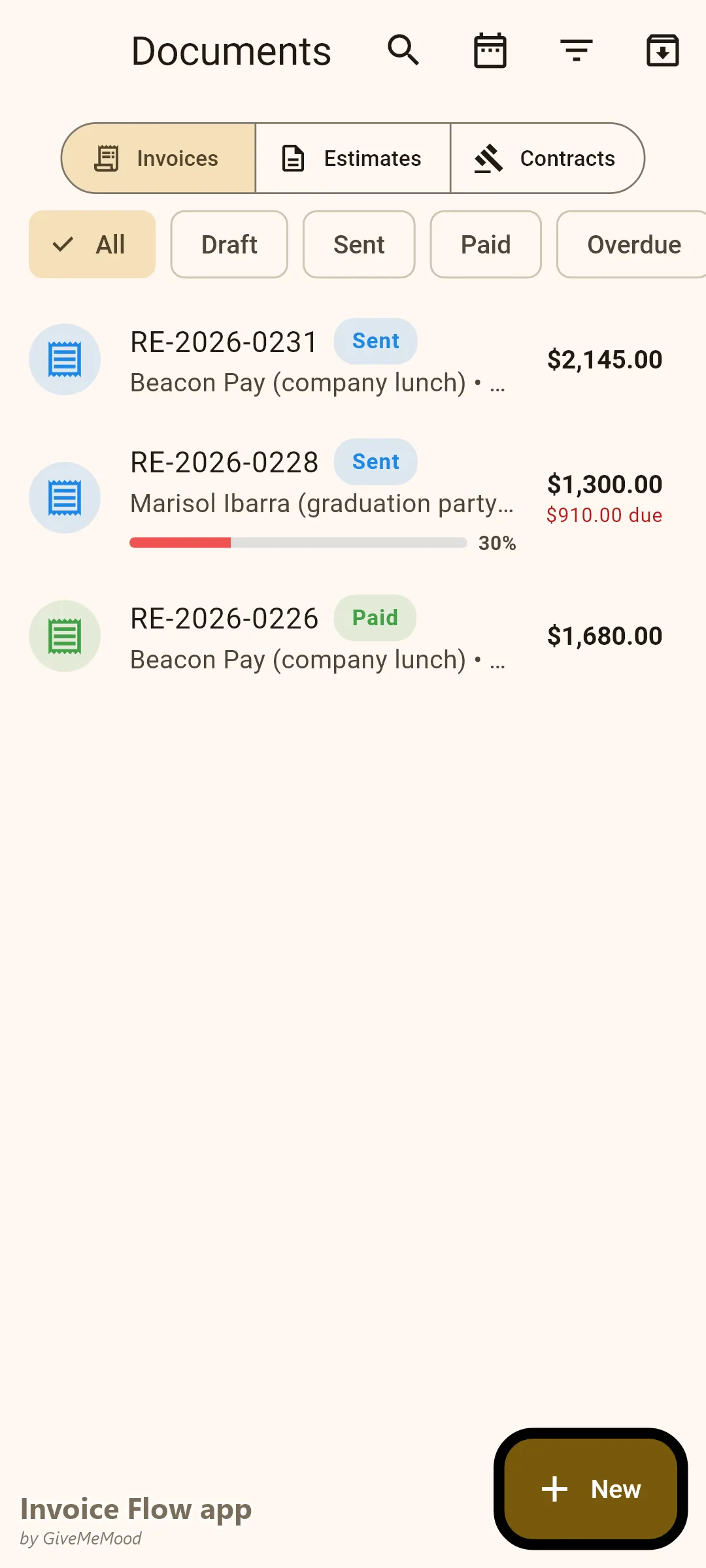
Some locations pay me a monthly site fee for regular access:
Monthly Site License — [Property Name] — [Month Year]:
- Service: Food truck operation rights — [Location description, e.g., Building C parking lot]
- Schedule: Tuesdays and Thursdays, 11:00 AM – 2:00 PM
- Monthly site fee: $400.00
- Note: Site fee is separate from and not reducible by sales performance.
- Payment Terms: Net-15
This is unusual billing for a food truck but worth including — some business parks, office complexes, and private property owners charge monthly site fees for prime lunch spots.
Meal Prep and Catering Order Invoices
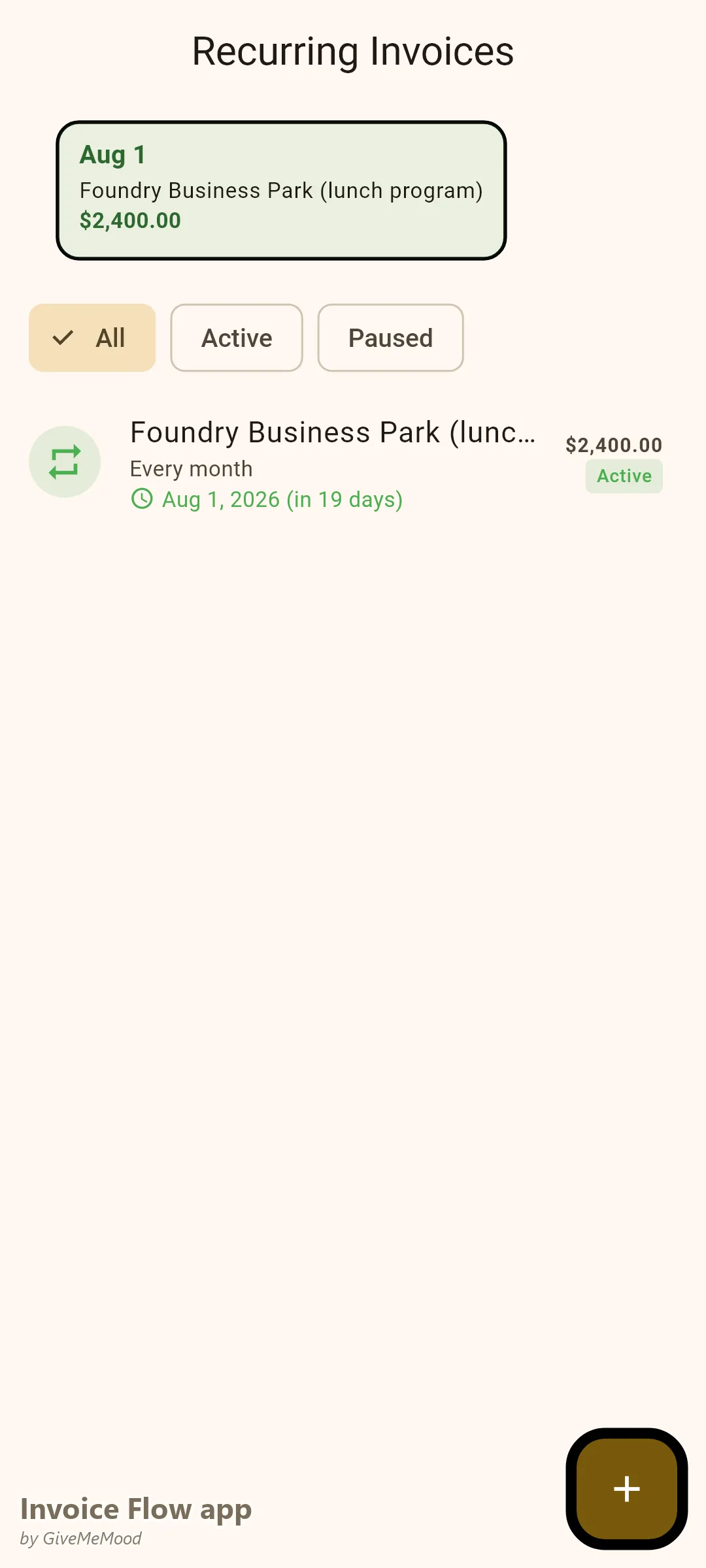
Batch orders for meal prep companies, corporate meal programs, or large catered events:
Catering Order — [Client/Company Name] — [Date]:
- Order: Corporate Meal Prep — Weekly Delivery
- Items:
- Beef scallion noodle boxes (40): 40 × $14.00 = $560.00
- Tofu mapo noodle boxes (20): 20 × $13.00 = $260.00
- Taiwanese popcorn chicken boxes (30): 30 × $13.50 = $405.00
- Cold brew oolong tea (90 units): 90 × $4.50 = $405.00
- Subtotal: $1,630.00
- Delivery fee: $45.00
- Total: $1,675.00
- Delivery: [Date and time] to [Address]
- Payment Terms: Net-15
Itemized catering orders with unit counts and per-item pricing make reconciliation easy for clients with food program managers. They need to verify the order against what was delivered.
Five Years In
Current business breakdown:
- 3 active corporate monthly accounts: $5,600 + $4,200 + $3,800 = $13,600/month recurring
- Regular service days (4/week): approximately $6,400/month
- Private events and festivals (2-3/month): approximately $3,600/month
- Catering orders: approximately $2,200/month
- Total monthly revenue: approximately $25,800/month
Year one (farmers market + service days only): approximately $72,000. Current year: on pace for approximately $310,000. The truck is the same. The menu is better but not unrecognizably different. The billing model opened the corporate revenue that changed the business.
What InvoiceFlow Does for Food Trucks
Food truck billing spans monthly corporate catering accounts with PO fields, private event invoices with deposit and cancellation policy, site license fees, and itemized catering batch orders. InvoiceFlow handles all of these from one Android app.
Download InvoiceFlow. Build a corporate catering invoice template with your per-service pricing, PO field, and net-30 terms. Add the deposit and cancellation policy to your event invoice template. The corporate account that pays monthly with one invoice is worth more than three service days of cash sales — and it starts with a professional invoice.
Marcus Chen is the owner of Wok & Roll food truck in Austin, Texas, providing Taiwanese street food at regular service locations, corporate catering accounts, private events, and catering batch orders.