 EN
EN  العربية
  Български
  Čeština
  Dansk
Dansk  Deutsch
  Ελληνικά
  Español
  Suomi
Suomi  Français
  עברית
עברית  हिन्दी
  Bahasa Indonesia
  Italiano
  日本語
日本語  한국어
한국어  Bahasa Melayu
  Nederlands
  Norsk
Norsk  Polski
  Português
  Română
  Русский
  Svenska
  Kiswahili
  ไทย
ไทย  Türkçe
  Українська
  Tiếng Việt
  中文
中文 Why I Stopped Chasing Tips and Started Invoicing Corporate Accounts
By David Okonkwo, Independent Taxi & Transport Driver — Chicago, IL
I have been driving in Chicago for fourteen years. Started with a medallion cab, transitioned when the platform apps arrived, and eventually landed on running my own vehicle independent of any single platform. I work airport runs, corporate transport, and medical appointments — the reliable, high-value work that does not depend on surge pricing or platform algorithm changes.
The decision to go independent was the right one. Running your own transport business means you keep more of the fare and build real client relationships. What it also means is that you are responsible for your own billing — which I handled badly for the first three years of independence.
The Cash Problem With Independent Transport
Platform apps handle billing automatically. You drive, the app charges the passenger, you get your cut. When you go independent, you lose that automation, and what you replace it with matters a great deal.
My informal billing approach for the first few years:
For individual clients: cash at the end of the ride, or a Venmo request I sent when I got home. Venmo requests from memory meant I sometimes forgot, sometimes got the amount slightly wrong, and sometimes never followed up on unpaid requests.
For my corporate accounts: I was sending a Word document at the end of the month with a list of runs and amounts. It was not formatted as an invoice. It did not have my business name, payment terms, or a reference number. One corporate account took sixty days to pay my first invoice because their AP department did not know what to do with it.
The Airport Corporate Account That Changed My Business
I drive for a mid-size law firm in the Loop. Their attorneys travel constantly — O’Hare and Midway runs, downtown hotel pickups for visiting clients, courthouse circuits. When I started with them, the billing was informal and the relationship felt precarious.
In late 2023, the firm’s office manager told me they wanted to put me on account and bill monthly. This was exactly what I needed. But they required a proper invoice format.
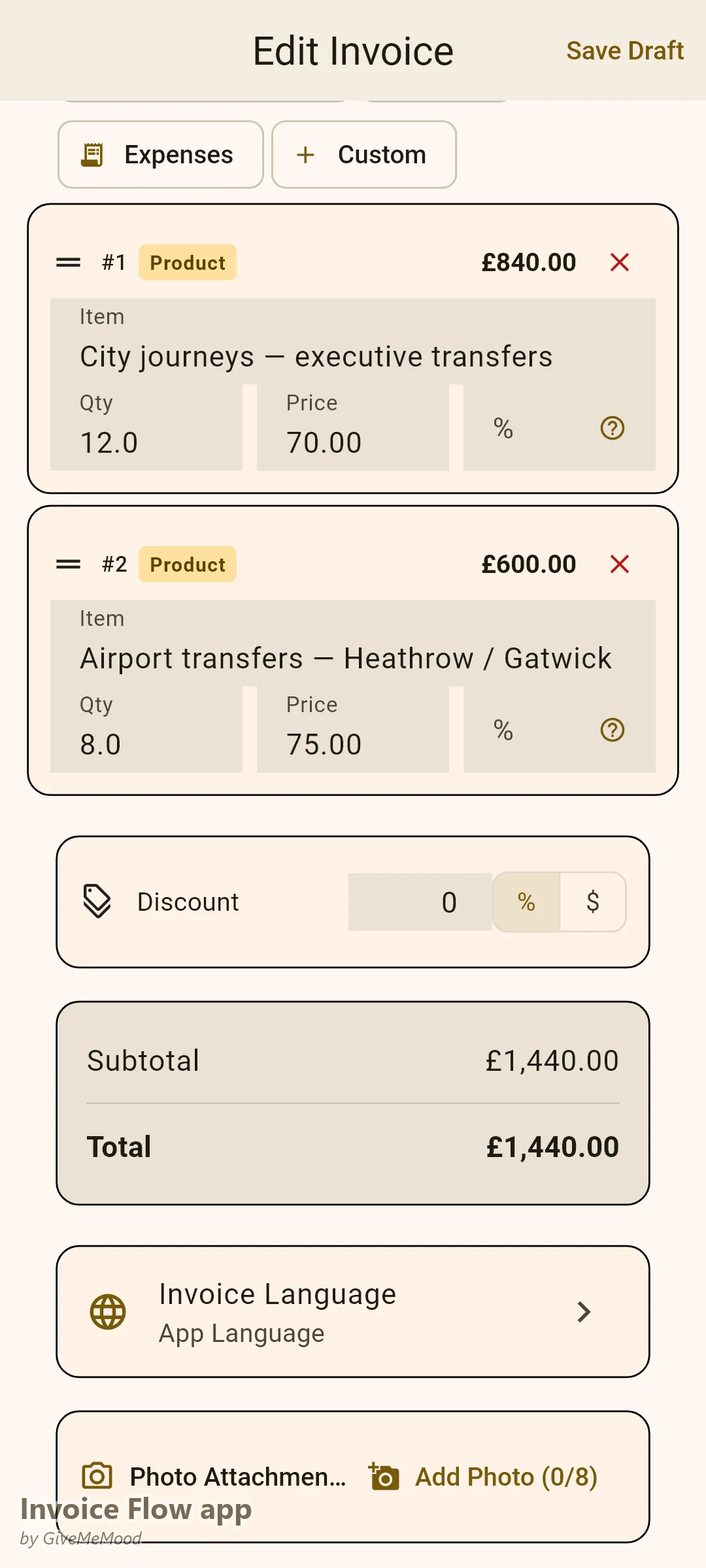
I set up InvoiceFlow and created my first corporate transport invoice:
“Transportation Services — [Law Firm Name] — June 2026:
June 2: Attorney pickup, 123 Wacker Dr → O’Hare Terminal 3. 7:15 AM. $78.00 June 3: Client pickup, O’Hare Terminal 1 → Palmer House Hotel. $82.00 June 4: Courthouse circuit (3 stops): $95.00 June 7: Attorney O’Hare run, early morning surcharge: $89.00 June 9: After-hours client hotel pickup: $112.00 […16 total runs…]
Monthly subtotal: $1,340.00 Fuel surcharge (6%): $80.40 Total: $1,420.40 Payment Terms: Net-15 Account: [Law Firm] — Account #LF-CHI-001”
The office manager processed it immediately. Payment arrived within twelve days. The relationship has been on this format for two years, and the volume has grown from approximately $800/month to over $1,400/month.
Building the Rate Card
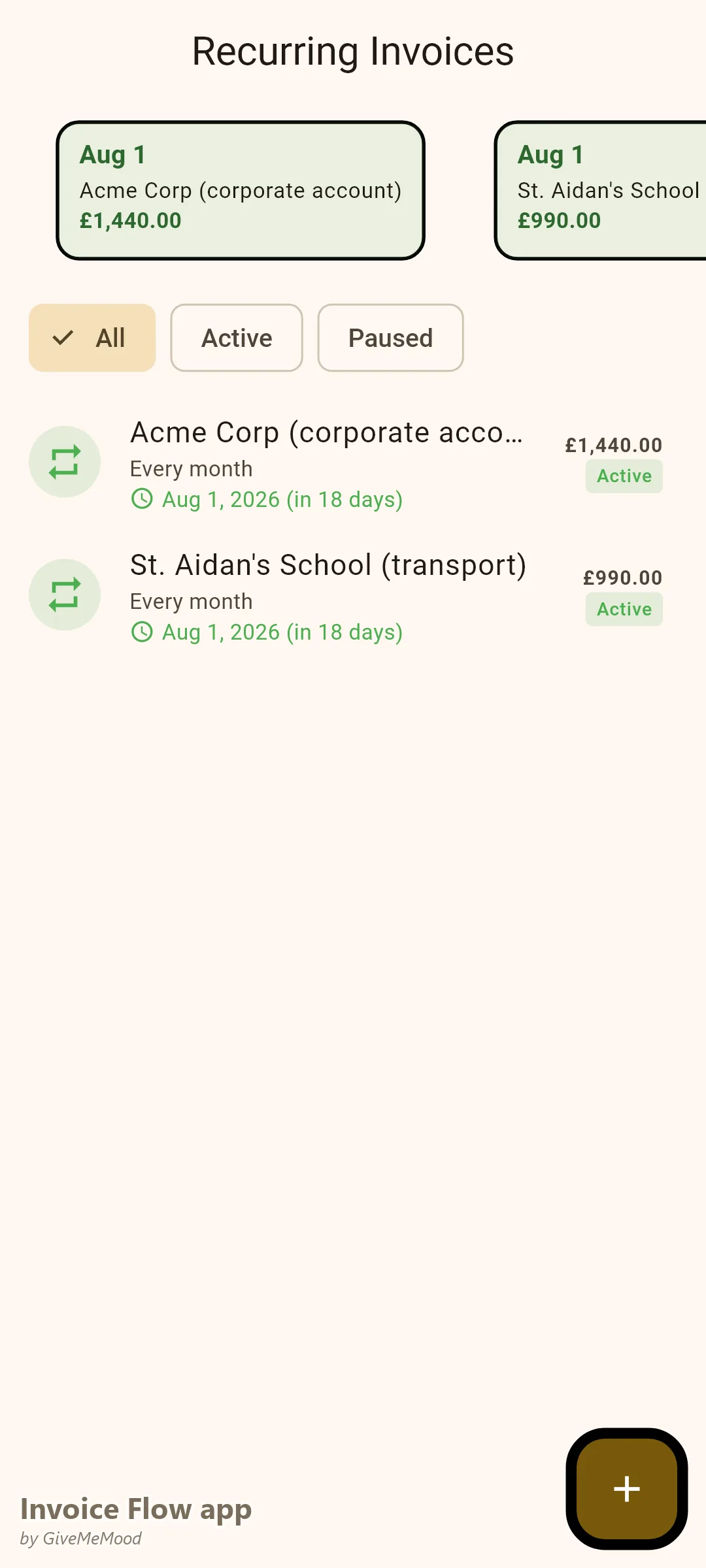
After formalizing the corporate account billing, I built a rate card in InvoiceFlow’s service catalog that I apply consistently:
Airport runs (O’Hare, 25 miles): $78.00 base Airport runs (Midway, 15 miles): $58.00 base Early morning surcharge (before 6 AM): $18.00 Late night surcharge (after 10 PM): $18.00 Waiting time (beyond 10 minutes): $12.00 per 15 minutes Additional passengers (3+): $8.00 per passenger Oversized luggage (more than 2 bags): $10.00 per bag Downtown circuit (per stop): $22.00 per stop Medical appointment transport (senior/accessibility): $55.00 base
Having fixed rates that I apply consistently means every client knows what to expect. I have not had a fare dispute since building the rate card. Clients who book with me know they are getting predictable, professional pricing.
Medical Appointment Transport: A Different Client Category
Medical transport clients — seniors getting to specialist appointments, patients with mobility limitations — are a different segment that requires different documentation. Some of these clients pay out of pocket; others have health insurance or PACE program coverage that requires documentation.
My medical transport invoice:
“Medical Transportation Services — [Client Name] — [Date]: Pickup: [Residence Address] Destination: Northwestern Memorial Hospital, Galter Medical Pavilion Appointment: Cardiology, 2:00 PM Transport Type: Wheelchair accessible transport Trip: $55.00 Wait time at appointment (1.5 hours): $36.00 (at $24/hr waiting rate) Return trip: $55.00 Total: $146.00 Insurance Reference (if applicable): [Reference Number]”
The documentation supports reimbursement requests for clients with coverage. Several of my regular medical transport clients pay me and then submit to their insurance or program administrator. My invoices give them what they need to do that.
The Corporate Referral Effect
The law firm account led to two additional corporate transport accounts through referrals. Both corporate clients came with the same requirement: proper invoicing, net-15 terms, consistent format.
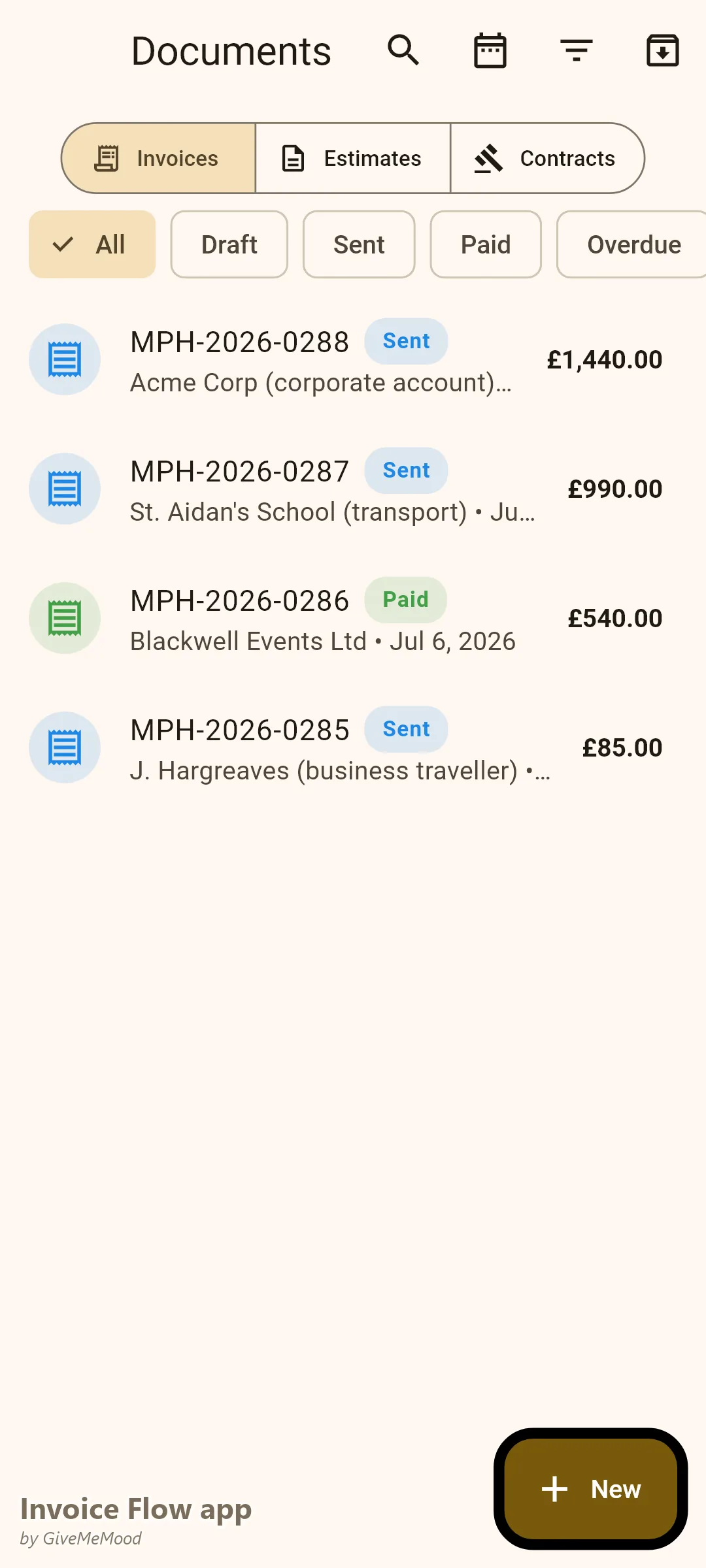
I now have four corporate accounts totaling approximately $3,800/month in predictable monthly billing. This base means I am not dependent on platform surges or high-demand event nights to make meaningful income. The corporate accounts provide stability. Individual fares and airport runs provide volume.
What Changed Financially
Before formal billing: approximately $4,200/month gross, highly variable, inconsistent corporate payment timing.
After InvoiceFlow and formal billing:
- $3,800/month in corporate account recurring billing, paid within 15 days reliably
- Individual client invoicing recovery up — mobile invoicing means I send the invoice before the client leaves the vehicle
- Fuel surcharge applied consistently to all runs — approximately $230/month recovered
- No Venmo requests forgotten — every fare is invoiced through InvoiceFlow
Annual income up approximately 22% — without adding one more drive shift.
Download InvoiceFlow. Build your rate card. Set up monthly invoice templates for your corporate accounts. Invoice before the client steps out of the vehicle.
David Okonkwo is an independent taxi and transport driver in Chicago, Illinois, serving corporate accounts, airport transport, and medical appointment transport across the Chicago metro area.