
 EN
EN  العربية
  Български
  Čeština
  Dansk
Dansk  Deutsch
  Ελληνικά
  Español
  Suomi
Suomi  Français
  עברית
עברית  हिन्दी
  Bahasa Indonesia
  Italiano
  日本語
日本語  한국어
한국어  Bahasa Melayu
  Nederlands
  Norsk
Norsk  Polski
  Português
  Română
  Русский
  Svenska
  Kiswahili
  ไทย
ไทย  Türkçe
  Українська
  Tiếng Việt
  中文
中文 The Real Estate Agent Who Started Charging for Her Expertise: A Billing Story
By Jennifer Walsh, Real Estate Agent & Investment Consultant — Austin, TX
For the first six years of my real estate career, I operated the way almost everyone in my industry does: I earned commissions. A seller hired me, I listed and sold the property, and I received a percentage of the sale price. A buyer worked with me, we found a house, and I received the buyer’s side of the commission from the seller’s proceeds.
The commission model is simple. It is also, in many ways, incomplete.
What I found over six years was that my clients — particularly my investor clients and my corporate relocation clients — needed far more from me than transaction execution. They needed market analysis, portfolio strategy, investment underwriting, and in the case of corporate clients, complex relocation coordination that extended well beyond finding a house. They were getting substantial value from me that was not captured in a commission structure.
I was giving away expertise that had taken me years to develop. And because it was free, neither I nor my clients fully appreciated its value.
The Investor Client Who Changed How I Thought About Billing
About four years into my practice, I began working with a software executive who was building a rental property portfolio in Austin. Over eighteen months, we analyzed thirty properties, visited twenty-two of them, and purchased six. The total transaction volume was approximately $2.4 million, generating commissions on the purchase side.
The commissions were real income. But when I calculated the total hours I spent on this engagement — the market analysis sessions, the investment return modeling, the negotiation strategy conversations, the lender introductions, the property management referrals — I realized that my effective hourly rate across the engagement was significantly lower than it should have been.
More than that: the client valued the analytical and strategic work as much as, or more than, the transaction execution. He told me once that he could probably find the right neighborhoods through Zillow; what he could not find on Zillow was someone who understood investment underwriting the way I did and could help him avoid expensive mistakes.
I was providing a premium service. I was charging only for the transactional part.
Learning What I Could Actually Bill For
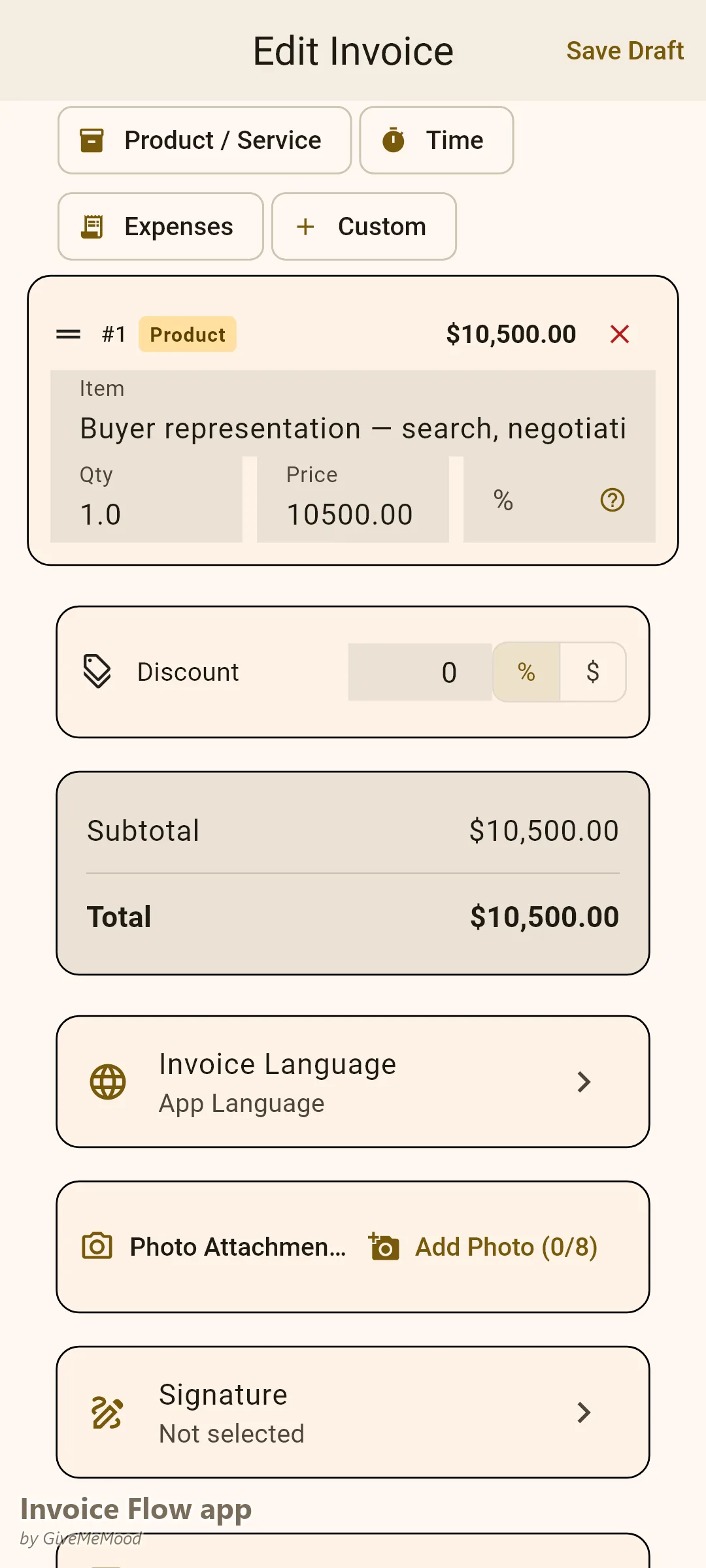
After that client finished his initial acquisition phase, I spent several months thinking about what an advisory practice would look like alongside my transactional work.
The model I landed on had three components:
Investment Advisory Retainer: For investor clients who want ongoing market analysis, portfolio review, and acquisition strategy — not just transaction execution when they are ready to buy — I offer a monthly retainer. The retainer gives them access to my analysis and advice whether or not we are in an active transaction.
Property Market Analysis Reports: For clients who want a formal written analysis of a specific market, neighborhood, or property type, I charge a flat fee for the report. These are not back-of-envelope conversations — they are structured analyses with data, comparables, and investment modeling.
Corporate Relocation Consulting: For HR departments and relocation management companies that need professional coordination for employee relocations, I charge a flat coordination fee that covers property search, neighborhood analysis, school district research, and logistics coordination. These clients need formal invoices for their accounting.
Setting up InvoiceFlow took about an hour. The more important work was identifying these services clearly and pricing them.
The First Advisory Invoice That Changed My Business
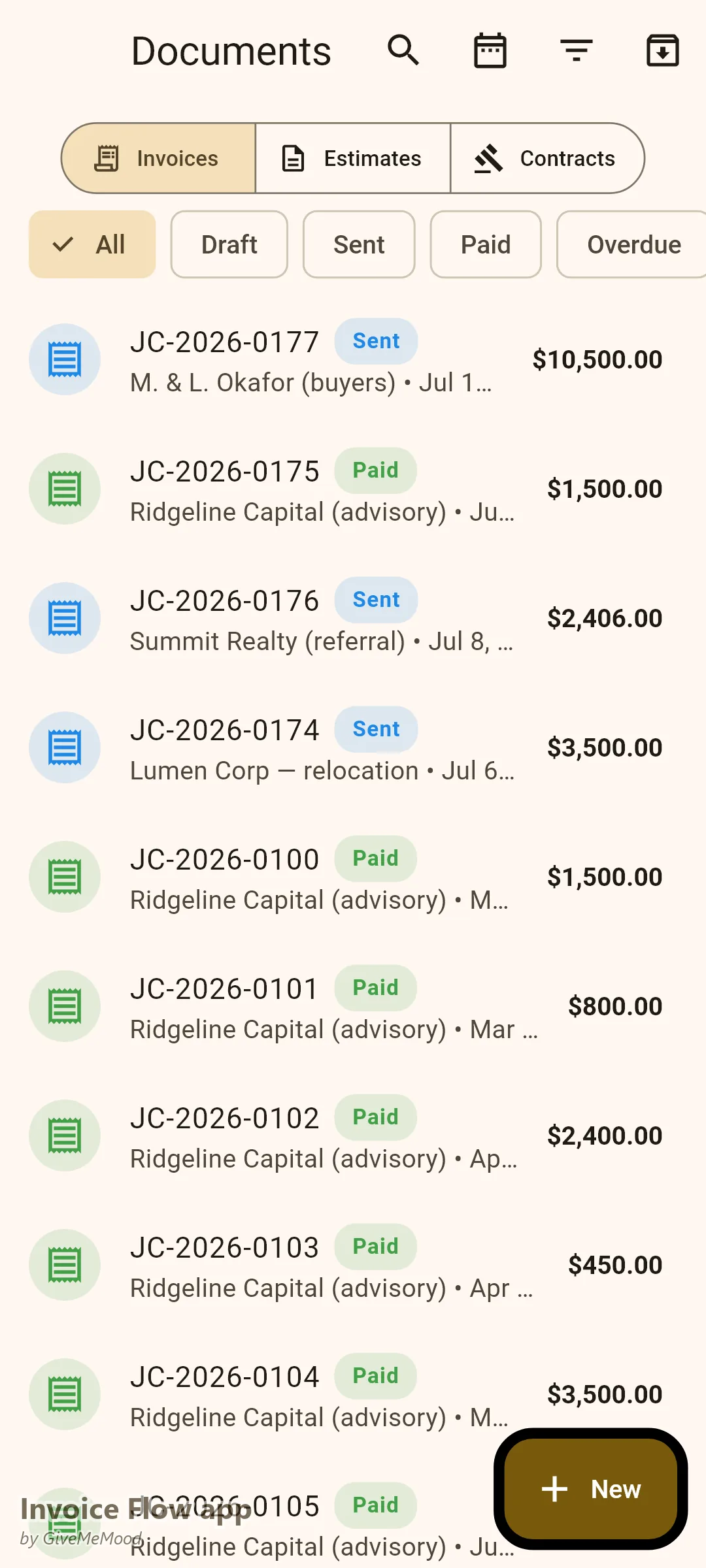
The first time I sent a formal invoice for advisory services was to a real estate investor who had come to me through a referral. He was not ready to buy yet — he was a few months away from having his capital ready to deploy — but he wanted ongoing conversation and analysis while he waited.
We agreed on a three-month advisory retainer. I sent the invoice from InvoiceFlow:
“Real Estate Investment Advisory — Austin Metro Market — 3-Month Retainer: Monthly strategy session, neighborhood analysis reports, investment deal review and underwriting support. January-March 2026: $1,800 ($600/month).”
He paid within two days. We started meeting monthly. When he was ready to acquire, he acquired three properties through me over the next eight months. He has since referred two other investors who are now advisory clients.
That first advisory invoice — $1,800 — opened a revenue stream I had not had before. The follow-on transactions are revenue I likely would have generated anyway. The advisory income is entirely new.
Corporate Relocation: The Billing Format That Unlocked the Business
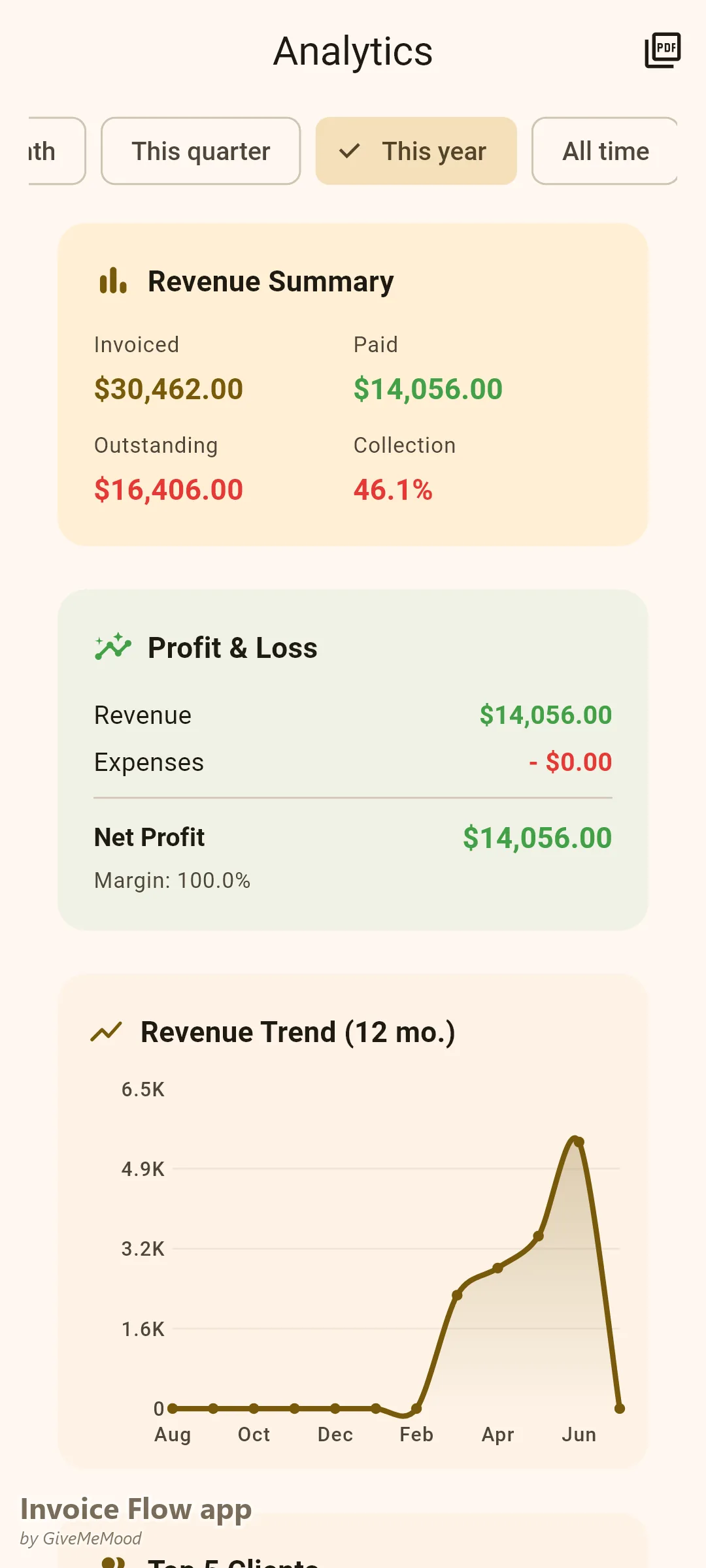
About a year into my advisory work, I received an inquiry from a technology company’s HR department. They were relocating a senior engineer from Seattle to Austin and needed a local real estate professional to help with the transition. They specifically mentioned that they had a relocation management company involved and would need all services formally invoiced.
This was my first formal corporate relocation engagement. The requirement for formal invoicing was the first test of my new billing approach.
I built the invoice in InvoiceFlow:
“Corporate Relocation Services — [Employee Name] Relocation from Seattle to Austin, TX — March 2026:
- Initial consultation and needs assessment: included
- Neighborhood and school district analysis: included
- Property search and showing coordination — 6 showings: included
- Offer and negotiation support: included
- Closing coordination and move-in support: included
- Total Relocation Coordination Fee: $3,500. HR Reference: RELOC-2026-ENG-047. Net-30.”
The company processed it through their accounts payable. Payment arrived within 25 days. The relocation manager sent a note saying my documentation had been “exactly what they needed.”
That company has since engaged me for three more relocations. The relocation management company they work with has referred me for two additional corporate clients. My corporate relocation work now generates $12,000-$18,000 per year from a handful of engagements, all of which require formal invoicing that I could not have produced before InvoiceFlow.
Referral Fee Documentation: The Awkward Transaction Made Professional
Real estate referral fees — when one agent refers a buyer or seller to another agent in a different market — are standard practice in the industry. What is often not standard is the documentation.
In my first four years, I handled referral fees informally. Another agent would send me a client, I would close a transaction, and we would settle on a fee percentage. The settlement would happen via check or wire with an email chain as the only documentation.
This is not professional. It is also legally exposed. Referral fees are income. They need to be properly documented for tax purposes. The informal approach made that documentation unreliable.
Now every referral fee has a formal invoice: “Referral Fee — [Agent Name/Brokerage] — Buyer Client Referral — Property Purchase at [Address], [Sale Price]: Referral at 25% of buyer’s side commission: $[Amount]. Per referral agreement dated [Date].”
The receiving agent gets a professional invoice. I have documentation for my records. The income appears in my analytics alongside my commission income and advisory retainer income. At year-end, everything is visible.
What My Practice Looks Like Now
My real estate practice has three revenue streams: commission income from transactions, advisory retainer income from investor clients, and consulting income from corporate relocation and analysis services. The commission income is still the largest component — probably 75% of total income. The advisory and consulting income represents the other 25%.
That 25% did not exist four years ago. It exists now because I started charging for expertise I had been giving away.
The other change: my commission clients have become more transactionally efficient. When investor clients are on a retainer, they come to me with better questions and more realistic expectations. The advisory relationship makes the transactional relationship more productive. I close more deals, faster.
If you are a real estate professional who is providing analysis, strategy, or coordination services beyond the transaction — and especially if you have corporate clients who need formal documentation — your billing system needs to match the services you are delivering.
Download InvoiceFlow. Build your advisory and consulting service catalog. Send your first retainer invoice. Start getting paid for all of it.
Jennifer Walsh is a licensed real estate agent and investment consultant in Austin, Texas, specializing in residential investment portfolios, market analysis, and corporate relocation services for technology sector clients.