 EN
EN  العربية
  Български
  Čeština
  Dansk
Dansk  Deutsch
  Ελληνικά
  Español
  Suomi
Suomi  Français
  עברית
עברית  हिन्दी
  Bahasa Indonesia
  Italiano
  日本語
日本語  한국어
한국어  Bahasa Melayu
  Nederlands
  Norsk
Norsk  Polski
  Português
  Română
  Русский
  Svenska
  Kiswahili
  ไทย
ไทย  Türkçe
  Українська
  Tiếng Việt
  中文
中文 InvoiceFlow for Web Designers & Agencies: Complete Billing Guide
The invoicing system built for freelance web designers, boutique agencies, and full-service digital studios
Web design billing is multidimensional. A project might start with a deposit, proceed through several milestones, require scope change documentation mid-build, then convert to a monthly retainer for ongoing maintenance. Corporate clients need purchase order references and net-30 terms. Small business clients need simple invoices they can pay by card.
InvoiceFlow handles every layer of web design billing from one Android app. This guide covers how to structure each invoice type.
Project Deposit and Milestone Billing
The worst web design billing pattern is 50% up front and 50% at completion. It creates a cash flow gap during the heaviest development work and gives clients a reason to drag out “completion” indefinitely.
Move to a three-milestone structure for any project over $3,000:
Phase 1 — Project Deposit (33%): Due upon signed agreement. Covers discovery, site architecture, wireframes. Issue immediately when the agreement is signed.
Phase 2 — Design Completion (34%): Due upon client approval of design mockups. Covers development build, integrations, content migration. Issue when the client approves designs.
Phase 3 — Launch (33%): Due upon site going live. Covers final testing, revisions, live deployment, 30-day post-launch support. Issue when the site launches.
Create all three invoice phases in InvoiceFlow at project start. Set each phase’s due date based on your estimated timeline. The invoices sit ready until each trigger point arrives.
Scope Change Authorization Invoices
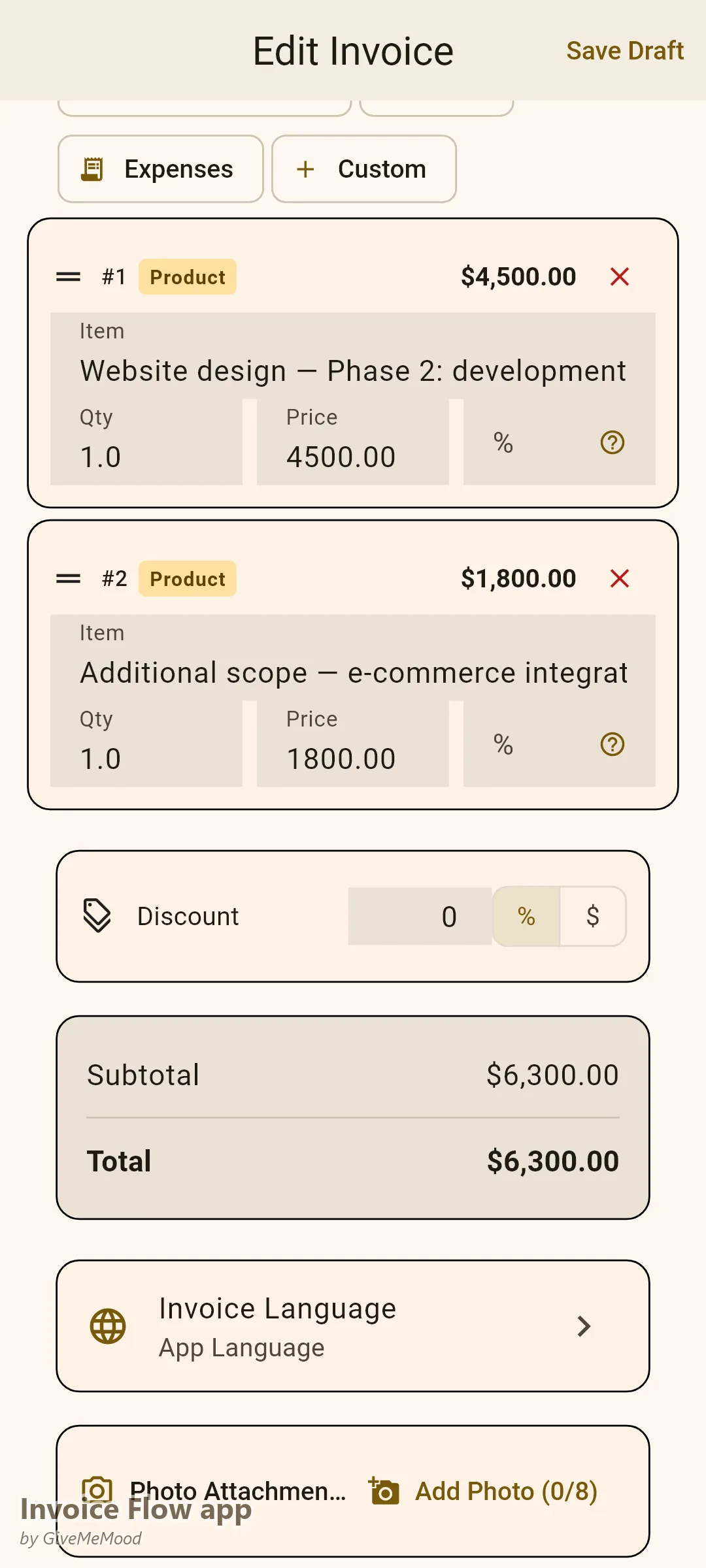
Every verbal “quick tweak” that you absorb without documentation is unbilled revenue. The fix is a formal scope change invoice sent before the work begins.
“Scope Change Authorization — [Client Name] — [Date]:
- Additional landing page design and build: 4 hours × $135/hr: $540.00
- Email newsletter template design: 3 hours × $135/hr: $405.00 Total additional scope: $945.00 Authorization required before work commences.”
The psychological effect of this document is significant. When scope is priced and documented, clients make explicit decisions about what they want rather than asking for additions casually. Most clients approve immediately. The few who push back do so by reducing the scope request — not by refusing to pay.
Standard scope change items to have ready in your service catalog:
- Additional page design and build (per page)
- Navigation revision (per hour)
- Copywriting (per page or per hour)
- Additional revision round beyond contract allowance (per hour)
- Plugin/integration addition (per hour)
- Logo or brand element update (per hour)
- Speed optimization pass (flat or per hour)
Monthly Retainer Invoices
Ongoing maintenance clients are the most valuable clients a web design business can have. Converting them from ad-hoc billing to formal retainer agreements creates predictable monthly income.
Build two or three tiers and let clients self-select:
Starter — 2 hours/month: Content updates, plugin updates, security monitoring. $270/month. Standard — 4 hours/month: Above plus design changes, performance optimization, monthly backup verification. $540/month. Premium — 8 hours/month: Above plus priority response, monthly analytics report, proactive recommendations. $1,080/month.
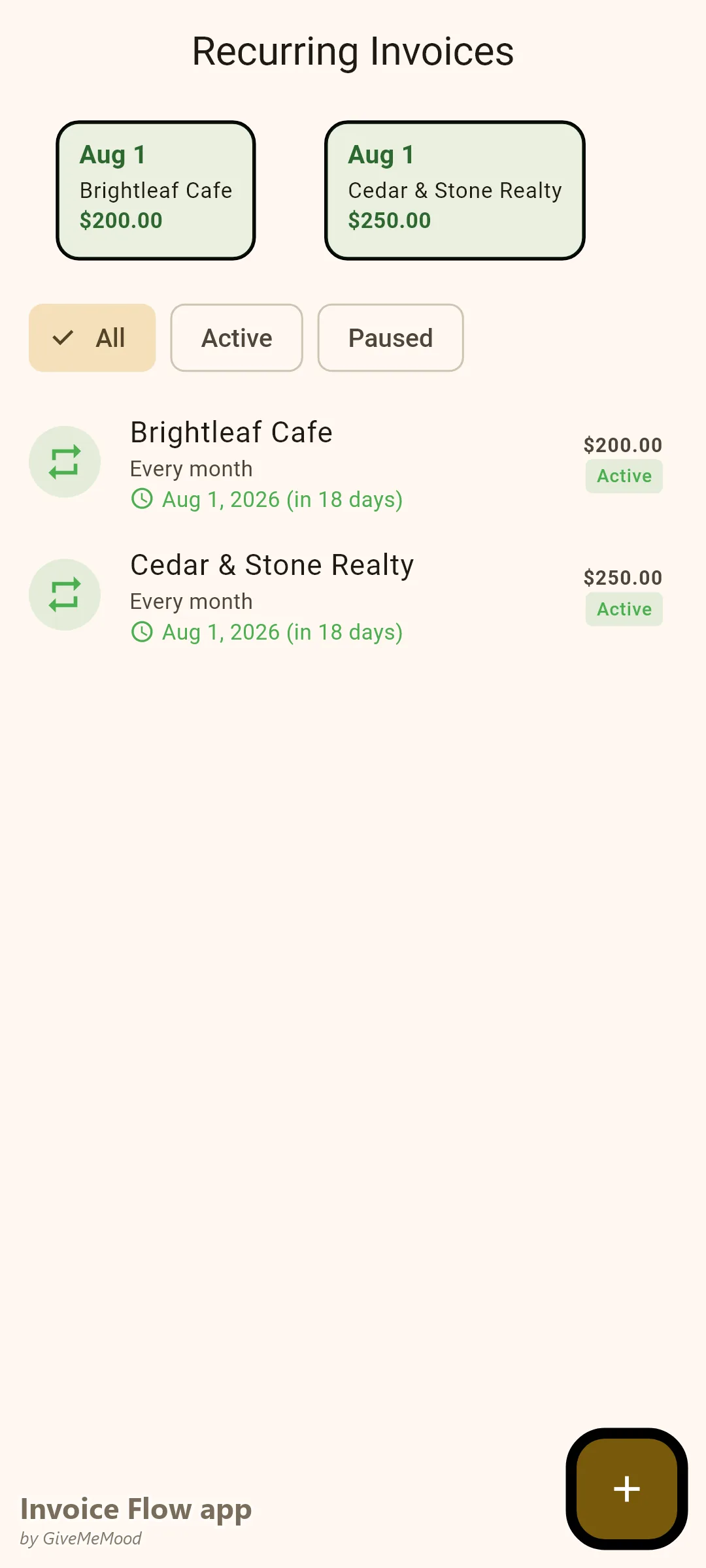
Set up recurring invoices in InvoiceFlow for each retainer client. The invoice generates and sends automatically on the same date each month. You set it up once. The income arrives consistently.
Define clearly what happens when a client exceeds their included hours: overage billed at your standard hourly rate, invoiced monthly alongside the retainer.
Corporate Client Invoicing
Corporate clients have AP departments with structured requirements. An invoice missing a PO number or vendor ID will sit in a review queue for weeks.
Use InvoiceFlow’s custom fields to add:
- Purchase Order Number
- Vendor/Supplier ID
- Project Code or Cost Center
- Net-30 payment terms clearly stated
- Invoice due date
“Web Development Services — [Corporate Client] — [Month Year]: PO Number: PO-2026-MKTG-0412 Vendor ID: VND-90234 Website redesign Phase 2 — development and CMS integration: $5,500.00 Payment Terms: Net-30 Due: July 15, 2026”
The AP team matches your invoice to their PO. Payment arrives within terms. No follow-up required.
E-Commerce Project Billing
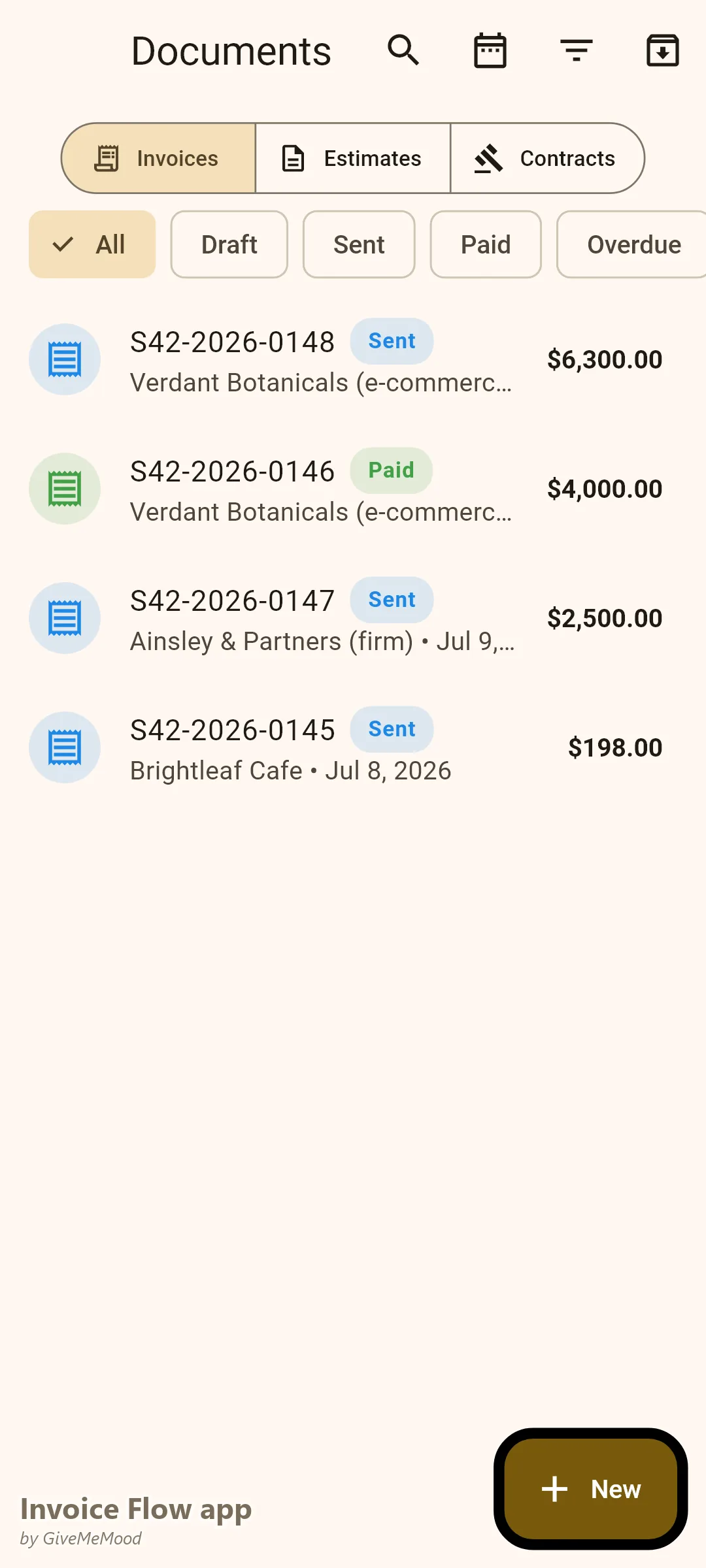
E-commerce projects have unique scope dimensions that standard web projects do not: payment gateway integrations, product catalog migrations, tax configuration, shipping logic. Document these specifically.
“E-Commerce Development — [Client Name]:
- WooCommerce installation and configuration: $450.00
- Payment gateway integration (Stripe + PayPal): $350.00
- Product catalog migration (142 products): $680.00
- Shipping zones and tax configuration: $250.00
- Mobile responsiveness audit and fixes: $320.00 Total: $2,050.00”
When every deliverable is named, the client understands exactly what they are paying for. Scope disputes become rare because there is nothing ambiguous to dispute.
What InvoiceFlow Does for Web Designers
- Phase invoice creation: build all project milestone invoices at kickoff, trigger each one when the milestone hits
- Recurring retainer invoices: auto-generate and send monthly without manual intervention
- Scope change templates: pre-build scope change line items so authorization invoices take two minutes to create
- Custom fields: add PO numbers, vendor IDs, project codes for corporate clients
- Service catalog: store your standard rates, package prices, and line item descriptions so every invoice starts from your established pricing
- Mobile invoicing: create and send invoices from your phone — useful when approving designs remotely or at client meetings
Getting Started
- Build your service catalog with your standard hourly rate, package prices, and common scope change line items
- Create a three-phase milestone template for project billing — apply it to every new project over $3,000
- Set up recurring monthly invoices for each current maintenance client
- Define your retainer tiers and convert ad-hoc maintenance clients this month
- Add a scope change invoice template — issue it before you do any out-of-scope work from today forward
Download InvoiceFlow. Stop absorbing scope creep. Build the retainer income that makes your web design practice sustainable.
InvoiceFlow is a free invoicing app for Android, designed for independent professionals and small business owners.