 EN
EN  العربية
  Български
  Čeština
  Dansk
Dansk  Deutsch
  Ελληνικά
  Español
  Suomi
Suomi  Français
  עברית
עברית  हिन्दी
  Bahasa Indonesia
  Italiano
  日本語
日本語  한국어
한국어  Bahasa Melayu
  Nederlands
  Norsk
Norsk  Polski
  Português
  Română
  Русский
  Svenska
  Kiswahili
  ไทย
ไทย  Türkçe
  Українська
  Tiếng Việt
  中文
中文 The Wedding Planner’s Billing Problem: How I Stopped Working for Free
By Sarah Chen, Certified Wedding Planner & Luxury Event Designer — San Francisco, CA
There is a particular type of exhaustion in the wedding industry that nobody warns you about when you start. It is not the sixteen-hour wedding day, though that is real. It is not the vendor crisis at eleven PM the night before a wedding, though that happens too. It is the specific exhaustion of spending weeks — sometimes months — building a relationship, developing a vision, sending proposal after proposal, answering every question a couple can think of, and then watching them hire someone else.
For the first two years of my business, this happened to me six times. I counted.
Six consultations that turned into ongoing conversations. Six couples I invested real time and creative energy into. Six times I did not send a deposit invoice because I was “still in the conversation” or “not wanting to push them.” Six times I ended up with nothing to show for it except the educational experience of having worked, extensively, for free.
The seventh time it started happening, I stopped the conversation on a Tuesday afternoon and sent a deposit invoice from my phone. She paid it within four hours. We planned her wedding for the following October. It was one of my favorite events of that year.
The Consultation That Costs More Than People Realize
A wedding planning consultation, when I do it properly, is a substantial piece of work. It involves an initial meeting of ninety minutes to two hours. It involves reviewing the couple’s vision, budget, and priorities in depth. It involves preliminary research — venues that fit their aesthetic and budget, vendors I might recommend, seasonal considerations for their date. It involves writing a proposal that articulates what full planning would look like for their specific event.
By the time I have done this with a couple and they are ready to make a decision, I have three to five hours of work invested. If they choose not to hire me, I have three to five unbilled hours in my rearview mirror.
Six times. Multiply by four hours. That is twenty-four hours of work I delivered and was not compensated for. At my rate, that is a significant number.
This is not unique to me. It is the structural vulnerability of high-touch service businesses that have long sales cycles. The client does not feel the cost of the consultation — they are not paying for it. The planner absorbs the cost — it comes out of their untracked, uncompensated time.
The deposit invoice is the solution. Not to the consultation itself — I still invest in consultations — but to the endless “conversation” phase that never closes without financial commitment.
Setting Up the Milestone Payment Schedule
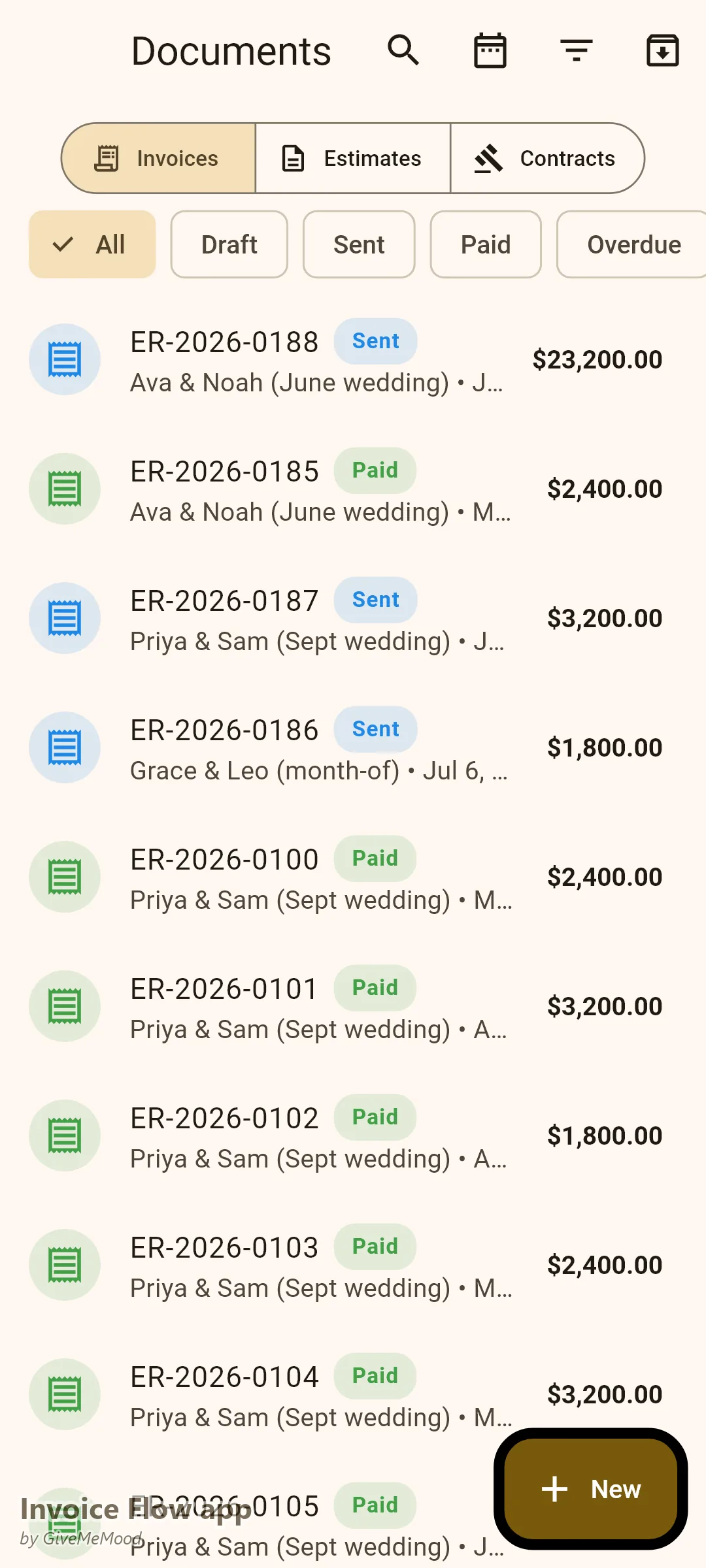
After the seventh couple, I built a milestone payment schedule in InvoiceFlow and started using it for every engagement.
The structure I settled on:
Engagement Deposit (30%): Due at contract signing. This is the date-securing payment. No date is held without it. Planning begins when it is received.
Milestone 1 — Vision and Venue Confirmed (25%): Due when the couple has chosen their venue and signed their venue contract. By this point, the vision is locked and major planning work is underway.
Milestone 2 — Vendors Contracted (25%): Due when all primary vendors are contracted — catering, photography, florals, entertainment. Major financial commitments from the couple’s side are in place.
Final Balance (20%): Due sixty days before the wedding. All logistics are finalized. The runway to the wedding is short. Financial closure before the final push.
The first time I sent this four-invoice schedule to a couple at the consultation, they were relieved. They had been worried about one large bill at the end. The milestone structure spread the cost in a way that felt manageable and made the milestones feel like celebrations rather than just more things to pay.
Every invoice in the schedule goes through InvoiceFlow. I set them up once, at the beginning of the engagement. Each one goes out at the appropriate milestone. Each one has the wedding date, the couple’s names, the event reference, and the payment terms clearly documented.
The Group that Taught Me About Vendor Pass-Through Billing
Early in my second year, I started managing vendor payments on behalf of clients — collecting their vendor deposits and forwarding them to the vendors. At the time, I was doing this in a loose, informal way: collecting a lump sum from the couple and writing checks to vendors from a separate account. It was exhausting, it was confusing for everyone involved, and it created situations where I was fronting money out of my own funds to cover timing gaps.
The vendor pass-through invoice format I now use is something I developed specifically to address this. It came from a conversation with a wedding coordinator at a luxury hotel who showed me how they documented vendor payments for high-value event clients.
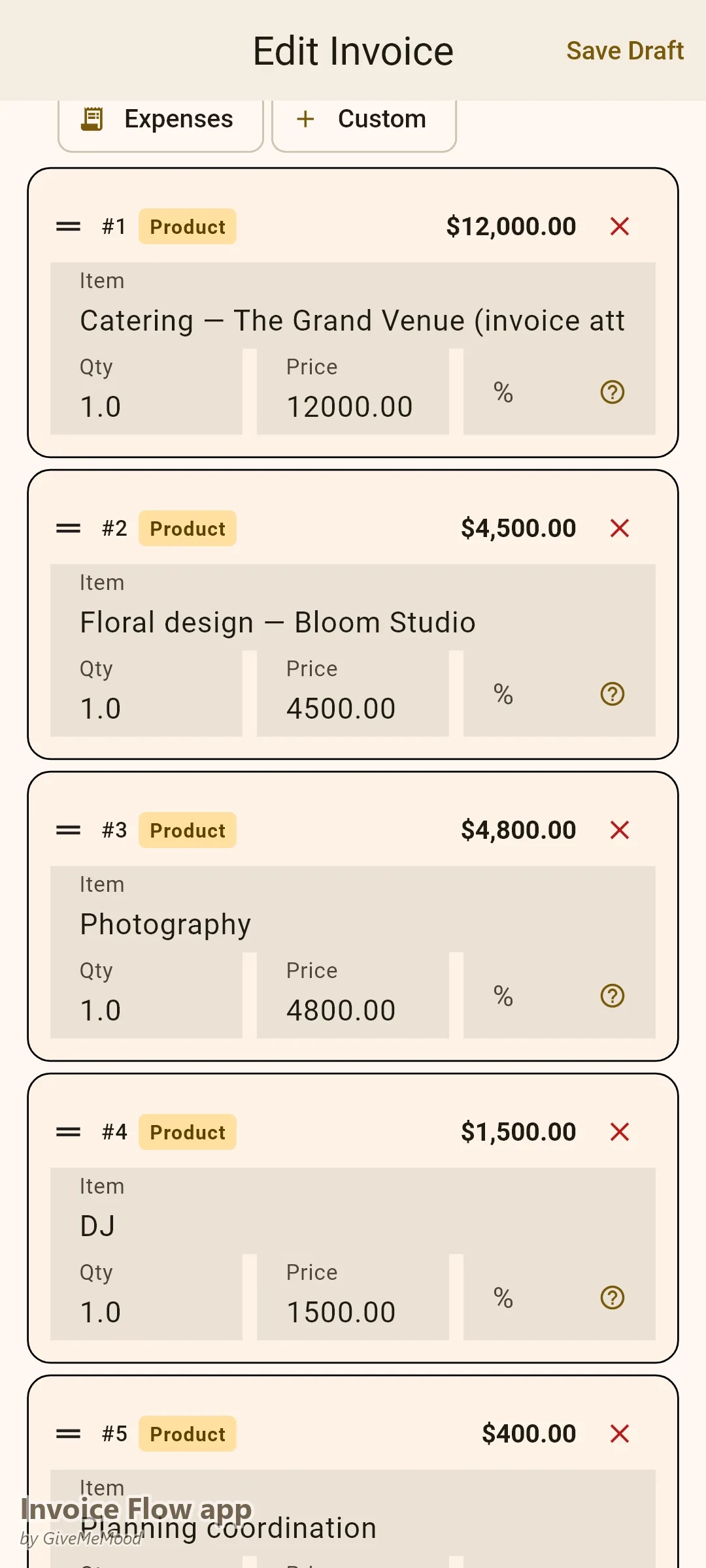
For a wedding I planned last year — a 180-guest garden reception in Napa Valley — the vendor payment batch invoice looked like this:
“Vendor Payment Batch — [Couple’s Names] Wedding — September 14, 2026 — Napa Valley Estate:
- Venue — Napa Valley Estate, main deposit: $12,000
- Catering — Harvest Table Catering, deposit per contract: $8,500
- Photography — Elena Russo Photography: $5,400
- Florals — Bloom & Vine Studio: $6,200
- Music — String Quartet + DJ: $3,800
- Videography: $3,500
- Transportation — Vineyard Shuttle Service: $1,200
- Wedding Planning Coordination (included in planning fee): $0 Total Vendor Batch Payment Due: $40,600. Due: November 1, 2025.”
Every vendor cost was visible. The couple could see exactly where their money was going. There were no surprises and no conversations about “what happened to that money.” Everything was documented before I touched a dollar of it.
Vendor pass-through billing has not just improved my clients’ experience. It has protected me legally. The documented record of every payment means there is no ambiguity about what I received and what I forwarded.
Luxury Market Billing: The Format Matters
About a year and a half into using InvoiceFlow, I started attracting clients with significantly larger budgets — weddings in the $200,000-$500,000 range. Couples in this segment have a different set of expectations. They have financial advisors. They have formal household accounting. They are used to professional documentation in every financial transaction they make.
When these clients receive an invoice that looks like the ones I used to produce — informal, unstructured, lacking key fields — it creates a subconscious mismatch between the service they are paying for and the documentation they are receiving. It does not look like the level they are paying for.
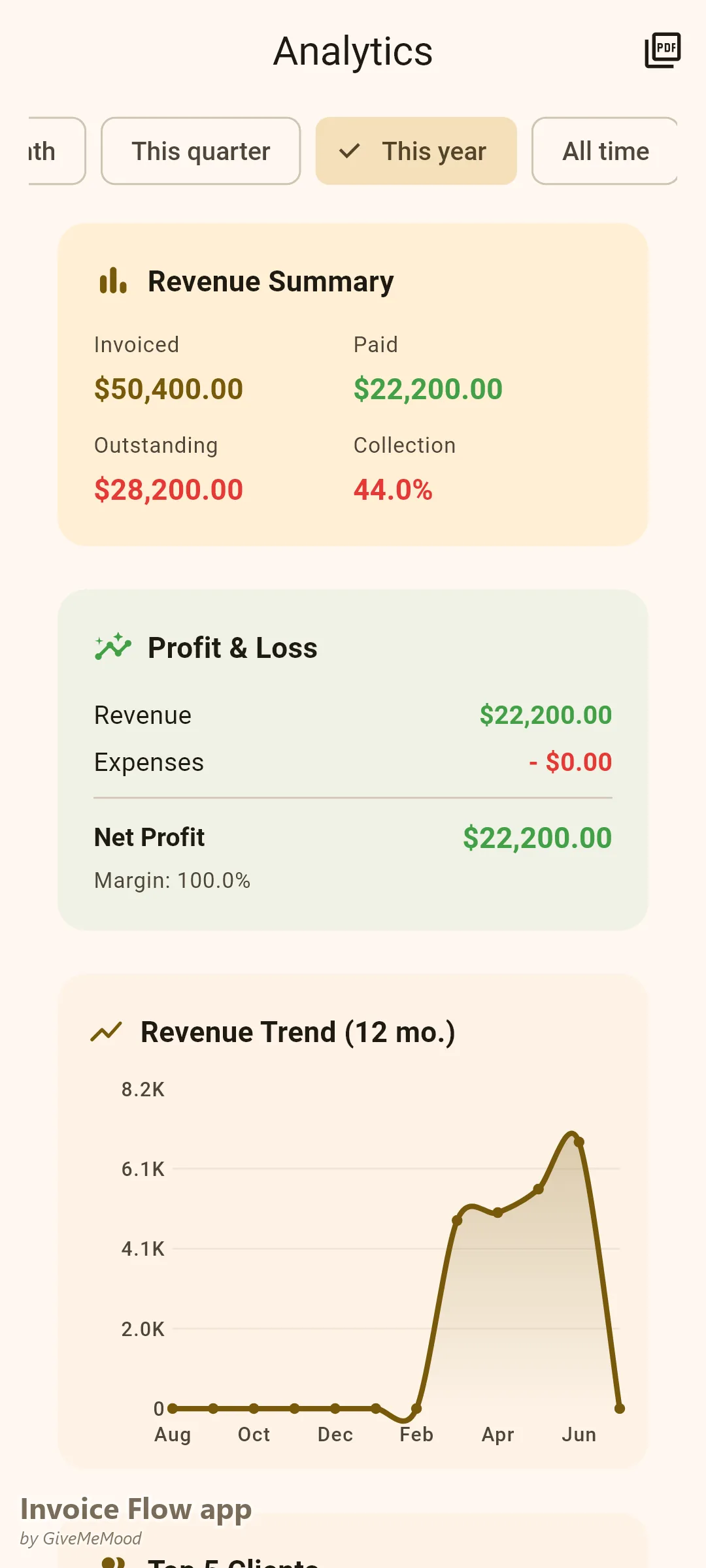
The InvoiceFlow PDF changed that. Professional formatting, clear line items, proper payment terms, event reference fields. The invoice looks like the rest of their financial documentation. It matches the level of the service.
One client — a technology executive planning her daughter’s wedding — told me during our initial meeting that she had selected me partly because my initial deposit invoice was “the most professional thing she had received from any vendor.” Her previous planner had asked for a check made out to her personal name.
Invoice formatting is not a superficial concern in the luxury market. It is part of the product.
Month-of Coordination: The Service I Almost Underpriced
Three years into my business, I started offering month-of coordination as a separate service tier — for couples who had done their own planning and needed professional execution for the final thirty days and the wedding day itself. It was a natural service extension, and I expected it to be simple to bill.
It was not. Because the service happens in a compressed window — thirty days of intensive coordination followed by a twelve-to-sixteen-hour wedding day — I kept treating it like a small service and pricing it informally. I would quote a number in conversation, the couple would say yes, I would follow up with a payment request, and the whole thing felt undervalued from the beginning.
When I built a formal month-of coordination invoice in InvoiceFlow with itemized line items — “Final vendor contact and confirmation, all vendors: $300,” “Timeline development and distribution: $400,” “Rehearsal coordination and direction: $250,” “Wedding day coordination, 12 hours: $1,200,” “Post-wedding vendor follow-up: $150” — the total was $2,300. Every line item was reasonable. Every line item was something I was doing. The total felt justified because the work behind it was visible.
I raised my month-of coordination rate by $400 after building this invoice. No client since has questioned it.
What the Business Looks Like Four Years After Changing Everything
I have a full calendar of full-planning weddings, a month-of coordination waitlist, and three corporate clients who book me for their annual executive dinners and holiday parties. Every engagement has a deposit invoice. Every engagement has a milestone payment schedule. Vendor pass-throughs are documented invoices. Scope expansions are change orders.
My conversion rate from consultation to booked client has improved significantly — not because I am selling harder, but because the deposit invoice at the end of the consultation creates a closing moment. The couple either commits or they do not. There is no more extended “conversation” that consumes weeks of my time.
The twenty-four hours of free consultation work from those six lost couples in year one? I will never get that back. But I have not repeated it since.
Download InvoiceFlow. Build your milestone payment schedule. Send the deposit invoice before you leave the consultation.
Sarah Chen is a certified wedding planner and luxury event designer in San Francisco, California, specializing in full-planning services for weddings from $80,000 to $500,000 in the Bay Area and wine country.