 EN
EN  العربية
  Български
  Čeština
  Dansk
Dansk  Deutsch
  Ελληνικά
  Español
  Suomi
Suomi  Français
  עברית
עברית  हिन्दी
  Bahasa Indonesia
  Italiano
  日本語
日本語  한국어
한국어  Bahasa Melayu
  Nederlands
  Norsk
Norsk  Polski
  Português
  Română
  Русский
  Svenska
  Kiswahili
  ไทย
ไทย  Türkçe
  Українська
  Tiếng Việt
  中文
中文 The Photographer Who Stopped Holding Dates for Free: A Billing Story
By James Okafor, Wedding & Commercial Photographer — Houston, TX
I shot my first paid wedding at twenty-three for a couple who were friends of a friend. They paid me $800 for eight hours. I shot twelve hours, spent thirty hours editing, delivered 600 images, and made approximately $19 per hour. I was thrilled.
Photography as a creative act is something I was trained for. Photography as a business is something I had to teach myself, mostly through expensive mistakes.
For the first three years of my business, I held wedding dates with a text message, collected deposits through Venmo, priced jobs based on what felt reasonable in the moment, and tracked my income in a note on my phone. I was working constantly and always surprised when the number in my bank account did not match my sense of how busy I had been.
The gap between the work I did and the money I earned was not a mystery, in retrospect. It was a billing problem.
The Saturday That Cost Me Twice
In my second full year, I held a wedding date — a premium October Saturday — for a couple I had met at a bridal show. We had a great conversation. They loved my portfolio. They said they would confirm by the end of the week.
I turned down two other inquiries for that date while waiting for them to confirm. The end of the week came. I followed up. They apologized and said they had decided to go in a “different direction.” I thanked them, felt sick to my stomach, and moved on.
The financial cost was: the two bookings I had declined were at my current rate, which meant I had turned away approximately $5,500 in revenue to hold a date for a couple who did not hire me.
The follow-up lesson came two months later when another couple I was in conversation with — again, no deposit — cancelled a different November date a week before I would have invoiced their balance. They had decided to elope. Again, no deposit, no recourse.
Two Saturday dates. Both lost. No income, no protection.
The Deposit System That Paid for Itself Immediately
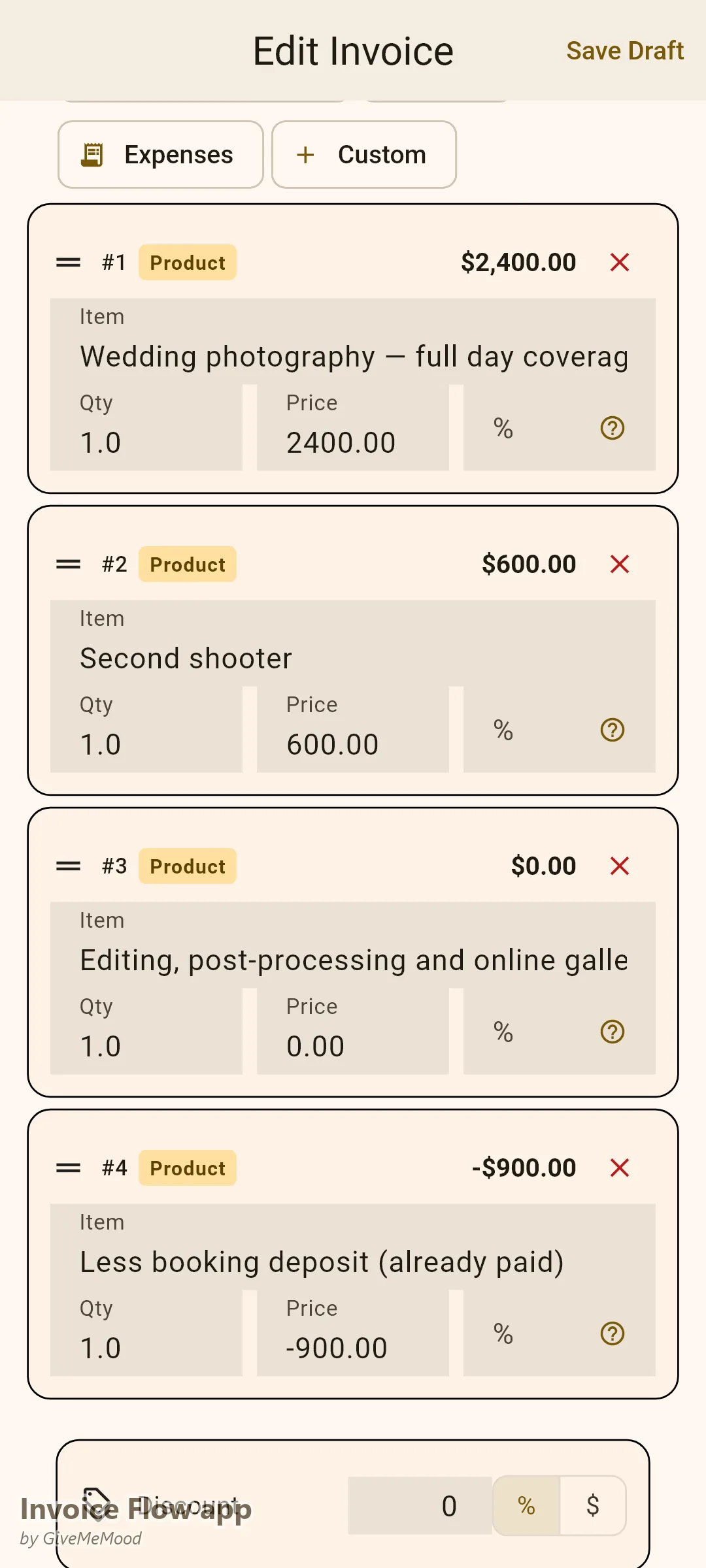
I set up InvoiceFlow on a Sunday afternoon and created my first proper invoice templates. The deposit invoice was the first priority.
My deposit structure: 30% of the total booking fee is due within 72 hours of booking confirmation. No date is held without a paid deposit. The deposit is non-refundable if the client cancels within 90 days of the event.
The following Tuesday, I had a consultation with a couple for their July wedding. At the end of the consultation, I quoted the package, we agreed on the scope, and I sent a deposit invoice before they left my studio. The invoice showed:
“Wedding Photography — Full Day Coverage, July 14, 2026 — Package: Full Day Unlimited Coverage, Second Shooter, Online Gallery Delivery. Booking Deposit (30%): $900. Balance due: May 1, 2026: $2,100. Total: $3,000.”
They paid the deposit that evening. The date was theirs.
I have not lost a booked date to a cancellation without deposit recovery since.
The Post-Production Invoice Nobody Ever Warned Me About
One of the specific problems my informal billing created was around post-production work. When I quoted a wedding package, I quoted it as a single number: “Wedding coverage and editing: $X.” Everything was bundled. The client had no idea what editing was worth. I had no way to charge appropriately when post-production went significantly over the norm.
Some weddings are straightforward edits — consistent lighting, well-composed shots, efficient processing. Some weddings are not. Low light venues, unpredictable weather, difficult white balance situations — these create editing sessions that run twice as long as average. When I was billing a flat package fee, I absorbed all of that extra time.
I restructured my package pricing to be transparent about what is included:
“Wedding Photography — Full Day Coverage, July 14, 2026:
- 10-Hour Coverage (ceremony through first dances): $1,800
- Second Shooter (6 hours): $500
- Culling and Selection (from approximately 3,500 raw images): included
- Standard Editing — up to 600 delivered images: included
- Online Gallery — 2-year hosted gallery with download access: included
- Additional Editing — if delivered count exceeds 600: $2.50/image Total: $2,300 + additional editing if applicable.”
When clients see the line items, they understand what they are paying for. They also understand the additional editing clause — and in practice, I have rarely invoked it. But having it documented means I can if the situation warrants.
Album and Product Billing: Revenue I Was Leaving Behind
For two years, I had conversations about albums with almost every wedding couple. Most of them expressed interest. Most of them said they would think about it. Most of them never followed up.
I was offering albums as an afterthought — mentioning them during the final delivery conversation, failing to follow up, losing the sale.
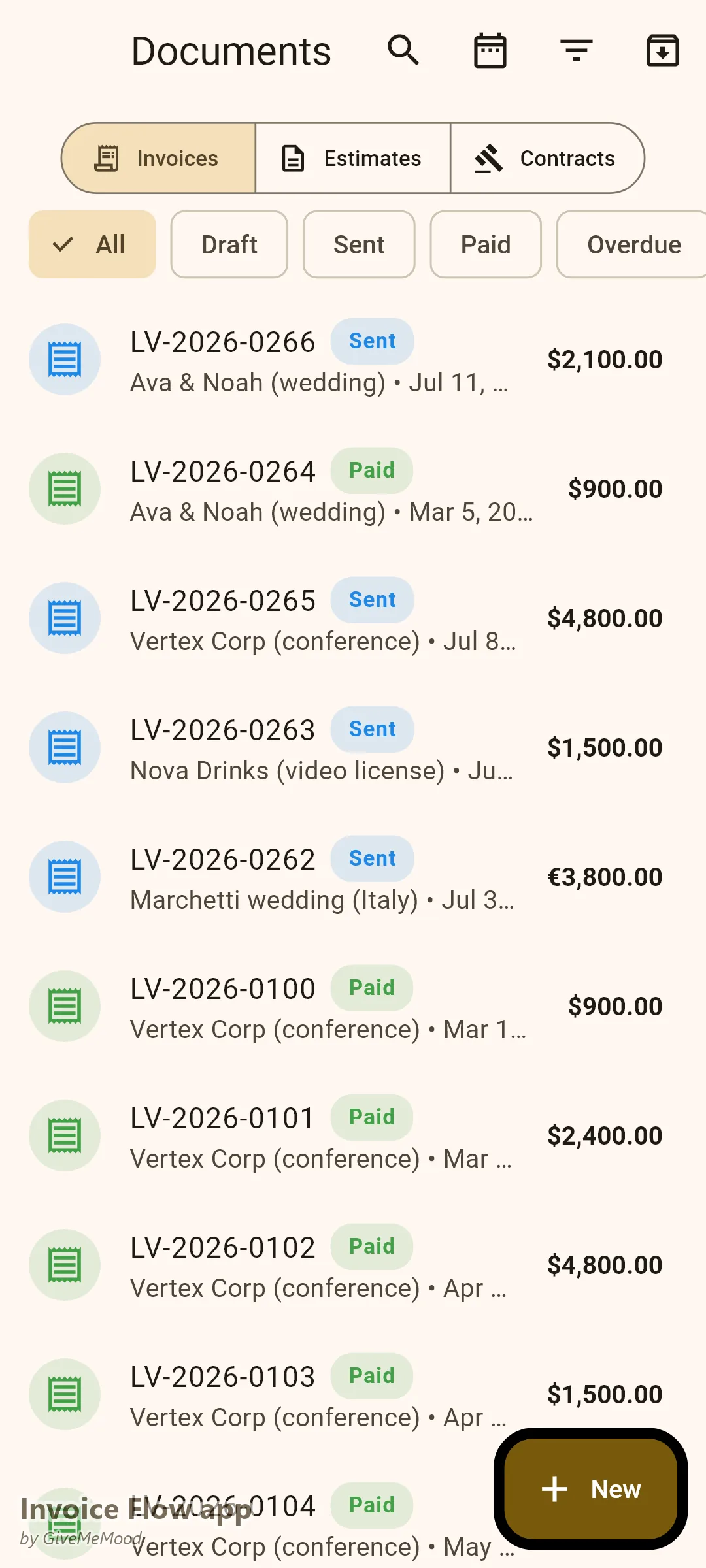
When I built album and product billing into my InvoiceFlow workflow — a dedicated invoice template for product orders sent at gallery delivery — everything changed. The invoice made the offer formal. It had a response deadline (thirty days from gallery delivery at the standard price). It had the specific product options with prices.
My first full year with the product invoice system, album sales increased by approximately $14,000 compared to the prior year. The clients had not changed. The offer had not changed. The billing mechanism made the offer real.
Current product invoice structure:
“Wedding Photo Products — [Couple’s Names] — July 14, 2026:
- Signature Album — 10×10 inch, 30 spreads, premium leather cover: $1,100
- Parent Album — 8×8 inch, 20 spreads (×2): $780 each
- Canvas Print — 20×30 inch, gallery-wrapped: $220
- Fine Art Print Set — 8×10 inch (×10 images, client selected): $350 Order total: [calculated at order] Order deadline at standard pricing: August 20, 2026.”
Corporate and Commercial Work: The Other Half of My Business
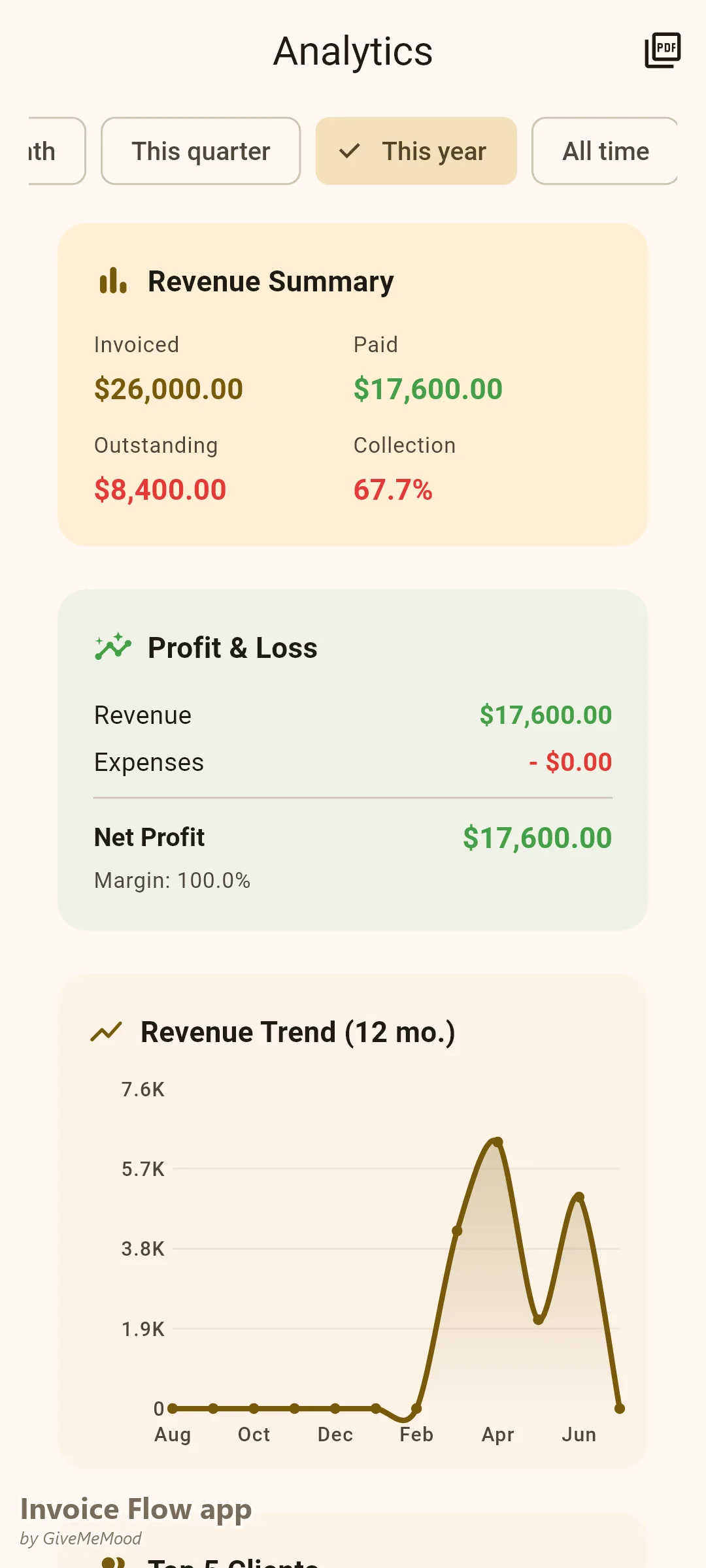
About three years into focusing on weddings, I started getting commercial inquiries — headshots for professional services firms, product photography for e-commerce clients, corporate event coverage for conferences and company parties. The commercial work had completely different billing requirements.
Corporate clients do not pay via Venmo. They need: formal invoices with invoice numbers, their vendor number or PO number, net-15 or net-30 payment terms, line-item descriptions that match how they track event expenses internally.
My first major corporate client — a law firm booking me for their annual partner retreat photography — required a formal invoice before they could approve any payment. I used InvoiceFlow:
“Corporate Event Photography — Annual Partner Retreat, September 22-23, 2026:
- Event Coverage, Day 1 — Full day, 8 hours: $1,600
- Event Coverage, Day 2 — Half day, 4 hours: $800
- Post-Processing and Delivery — 200 curated images: $400
- Online Gallery License — Corporate license, unlimited internal use: $300 Total: $3,100. Vendor Number: [LF-VENDOR-2847]. Net-15.”
They processed it through their accounting department. Payment arrived on day 11. The managing partner asked me about their spring event before I left.
Commercial photography now represents approximately 35% of my annual revenue. Every commercial client pays on invoice terms. The income is reliable and the clients are easy to work with.
Licensing: The Revenue Most Photographers Miss
One specific billing category that I had completely ignored until year four was image licensing. When I shot commercial images — product photos, venue photography, corporate headshots — I was delivering images and considering the job complete. I was not thinking about usage rights.
When a client uses images for advertising, on a website, in marketing materials, or in ways beyond what was originally discussed, that usage typically carries a licensing fee in professional commercial photography. I was not capturing any of it.
After restructuring my commercial billing, I now include licensing terms on every commercial invoice and issue separate licensing invoices for extended use:
“Image License Extension — [Client Name] — Product Photography, January 2026:
- Original license covered: 1-year digital website use
- Extended license: 2-year print and digital advertising use, including print publications, digital ads, and social media commercial use
- License Extension Fee: $850”
Licensing revenue in my first full year of tracking it: $6,200. That is income I had been delivering services for and not charging.
What the Business Looks Like Now
Five years after shooting my first wedding for $800, I have a full calendar of weddings at rates I would not have believed back then, five corporate accounts, a commercial photography roster that fills the slow wedding seasons, and product sales that generate consistent additional revenue through the year.
My billing is entirely through InvoiceFlow. Deposits go out at the end of every consultation. Balance invoices go out thirty days before the event. Product invoices go out at gallery delivery. Corporate events are billed net-15 with formal invoice documentation. Licensing is tracked and invoiced when applicable.
The gap between the work I do and the money I earn has closed. I know what I bill each month. I know what is outstanding. I know what is coming.
The $19/hour wedding in year one taught me that doing good work is necessary but not sufficient. Billing for it is the other half.
Download InvoiceFlow. Build your invoice templates. Send the deposit invoice before the couple leaves the studio. Stop holding dates for free.
James Okafor is a wedding and commercial photographer in Houston, Texas, specializing in full-day wedding coverage, corporate event photography, and commercial product and lifestyle photography.