 EN
EN  العربية
  Български
  Čeština
  Dansk
Dansk  Deutsch
  Ελληνικά
  Español
  Suomi
Suomi  Français
  עברית
עברית  हिन्दी
  Bahasa Indonesia
  Italiano
  日本語
日本語  한국어
한국어  Bahasa Melayu
  Nederlands
  Norsk
Norsk  Polski
  Português
  Română
  Русский
  Svenska
  Kiswahili
  ไทย
ไทย  Türkçe
  Українська
  Tiếng Việt
  中文
中文 How I Built a Six-Figure Entertainment Agency on Professional Invoicing
By Marcus Webb, Founder — Encore Talent & Events, Atlanta, GA
I booked my first corporate entertainment act at twenty-seven using my personal Gmail account, a PayPal business account I had set up that morning, and a contract template I found on a legal forms website. The client was a pharmaceutical company booking a comedian for their national sales conference. The fee was $8,500. My commission was fifteen percent: $1,275.
I remember thinking: this is the easiest money I have ever made.
I was right about the opportunity. I was completely wrong about the “easy” part.
What I did not understand yet was that the financial complexity of running an entertainment agency is almost entirely in the billing. The act is easy. Finding the talent is something I am good at. Matching a client’s brief with the right performer, negotiating a fair rate, managing the logistics of getting someone on a stage at the right time — that I can do in my sleep.
Managing the financial flow between client, agency, and talent in a way that is documented, professional, and legally defensible? That took me three years and a few expensive lessons to figure out.
The Commission That Got Disputed
In my second year, I booked a regional blues musician for a corporate client’s holiday party. The musician’s fee was $3,500. My commission was fifteen percent: $525. I collected the full $3,500 from the client, paid the musician $3,500 (the full amount — a mistake I did not catch until the next day), and then tried to figure out how to invoice the musician for my commission.
There was no formal commission agreement. There was an email thread. There was a contract between the musician and the client that I had drafted, but it did not clearly specify the agency commission split. When I contacted the musician about the $525, he pushed back. He had received $3,500, which was the fee he had quoted. From his perspective, he had been paid correctly.
We settled it eventually, for less than I was owed. The total loss was not catastrophic. The lesson was.
Every commission arrangement, every booking fee, every rider pass-through — all of it needs to be in a documented invoice. Not an email. Not a verbal agreement. An invoice with a number, a date, a line-item description, and payment terms.
Building the Three-Invoice System
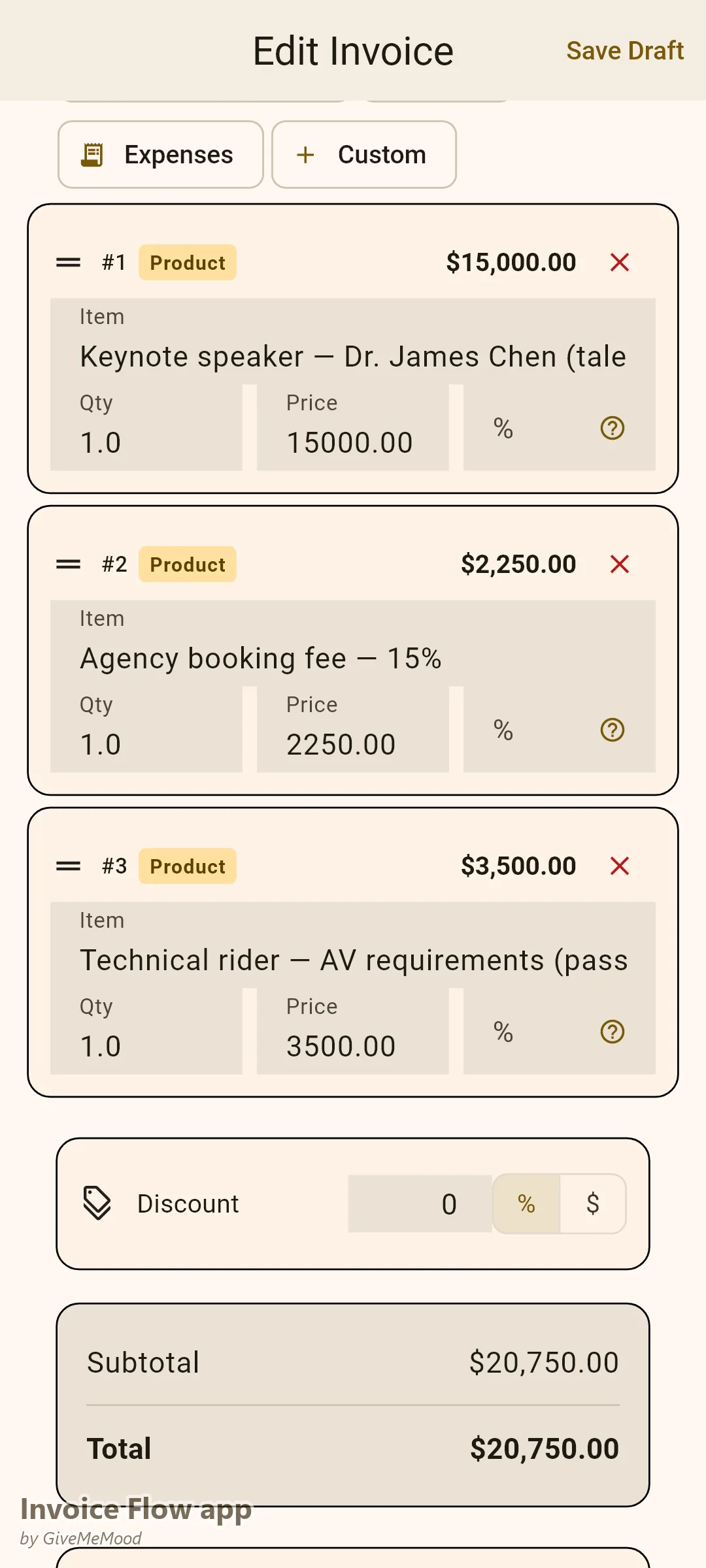
The system I developed after that experience uses three invoices for every booking:
Invoice 1 — Client Booking Invoice: Sent to the corporate client before the event. This invoice covers the talent fee, the agency booking fee, and any rider or technical requirements pass-throughs. The client pays this invoice. This is their complete financial commitment.
Invoice 2 — Agency Commission Invoice: This documents the commission arrangement between the agency and the talent. It is issued after the booking is confirmed, before payment. It makes clear that the talent fee and the agency commission are separate components of the total booking cost.
Invoice 3 — Talent Payment Confirmation: After the event, once all funds have settled, a payment confirmation goes to the talent documenting what they received and what was retained as commission.
This system eliminates every ambiguity I encountered in year two. The client knows exactly what they are paying and to whom. The talent knows exactly what they will receive and what the agency retains. There is a paper trail that protects everyone.
Setting this up in InvoiceFlow took an afternoon. The templates are reusable. Every booking now follows the same three-invoice structure.
The Corporate Event Account That Required Everything
About two years into building the agency, I pitched to represent an Atlanta-based entertainment contract for a large financial services firm that hosted twelve to fifteen events per year. Their employee appreciation events, client dinners, holiday parties, and executive retreats all needed entertainment — live music, keynote speakers, interactive performers, and DJs.
I won the pitch. Then I found out what it actually meant to be their entertainment vendor.
They had an accounts payable system that required: formal invoice with invoice number, their specific event reference code, net-30 payment terms, line-item descriptions for each cost component, total in USD, and supporting documentation for any pass-through costs (rider requirements, technical specifications).
My existing billing system — PayPal invoices with minimal detail — was completely inadequate. Their AP team returned the first two invoices I submitted because they lacked event reference codes and proper line-item formatting.
I set up InvoiceFlow and rebuilt my invoice template specifically for this client. The first compliant invoice looked like:
“Entertainment Booking — Annual Client Appreciation Dinner, March 10, 2026:
- Keynote Speaker: Michael Torres — 45-minute keynote on leadership: $12,000
- Agency Booking Fee (15%): $1,800
- AV Technical Rider (per contract addendum): $2,400
- Travel — Return flights, Atlanta to Chicago: $580
- Hotel — 1 night: $195 Total: $16,975. Event Reference: FSF-EVENTS-Q1-2026-004. Net-30.”
Their AP team processed it without comment. Payment arrived on day 27. The account manager called me the week after to ask about booking a jazz quartet for their executive retreat in June.
That account has generated $180,000+ in annual booking volume for three consecutive years. I would not have it without professional invoicing.
Rider Pass-Throughs: The Costs That Used to Disappear
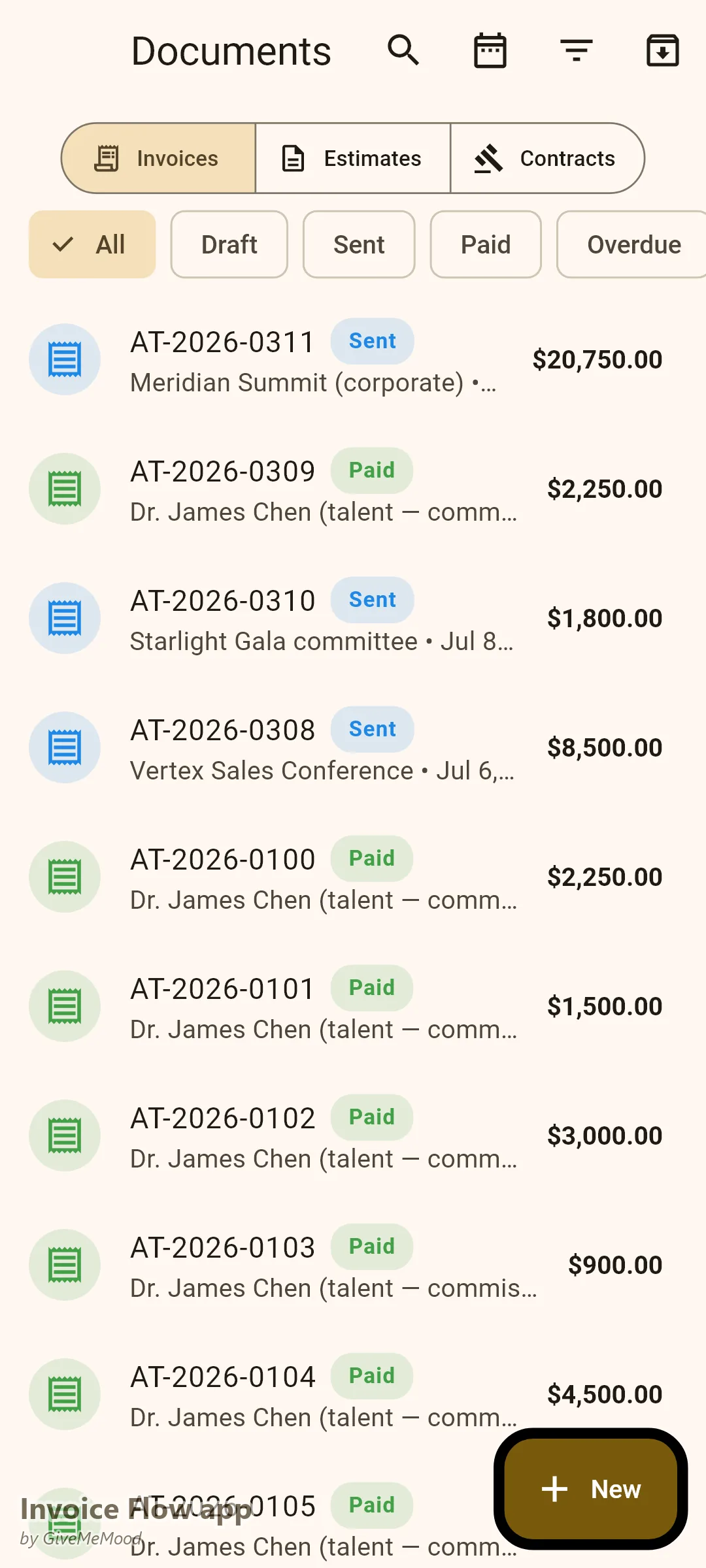
Before I formalized my billing, I had a chronic problem with rider costs. A talent’s contract would include a hospitality rider — hotel rooms, catering, specific equipment — and I would forward those costs to the client informally. Sometimes the client paid. Sometimes they would say they had misunderstood what was included. Sometimes the invoice got lost in an email thread.
The result: I would end up either absorbing rider costs from my own funds or having an uncomfortable conversation with the client after the event when I was trying to reconcile.
Now every rider cost is a line item on the client invoice, issued before the event. “Hospitality Rider — Green room setup, catering for 6 performers per contract section 4.2: $850.” The client sees it before they agree to the booking. It is part of the total commitment. It is not a surprise.
Rider cost disputes dropped to zero after I implemented this. Not because riders got smaller. Because they were visible from the beginning.
Building a Speaker Bureau Side
About three years into the agency, I started representing corporate keynote speakers — executives, authors, thought leaders — who wanted an agent to handle their speaking engagements. The speaker bureau side of the business required a slightly different billing structure.
Speaker bureau clients — companies booking speakers for conferences and events — expect formal speaker invoices that distinguish the speaker fee, the bureau commission, and any travel and accommodation costs clearly. The total fee the client pays goes through the bureau, the bureau retains its commission, and the speaker receives the remainder.
InvoiceFlow’s ability to create detailed line-item invoices with custom fields made this straightforward. The speaker bureau invoice template I built:
“Speaker Booking — Annual Industry Conference, April 22-23, 2026:
- Speaker: Dr. Patricia Morrison — Opening Keynote, 60 minutes: $18,000
- Bureau Representation Fee (20%): $3,600
- Travel Allowance — Business class return flights: $1,800
- Accommodation — 2 nights boutique hotel: $480 Total: $23,880. Event Reference: [CLIENT CODE]. Net-30.”
The speaker bureau side now represents fifteen speakers and generates approximately $280,000 in annual booking volume. Every booking follows the same invoice structure.
The Income Picture I Did Not Have Before
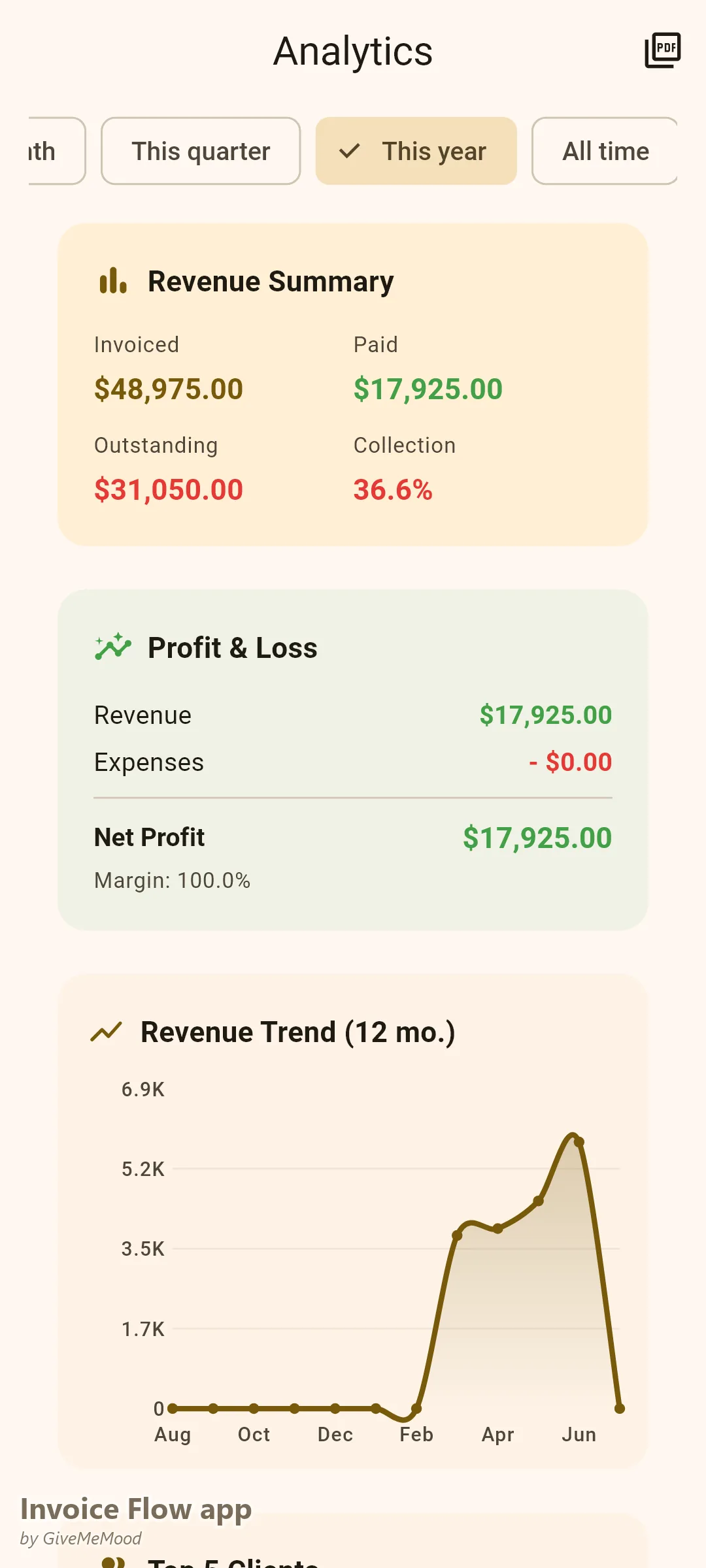
Before InvoiceFlow, I had a rough sense of my monthly commission income but no clean view of revenue by booking type, client, or talent category. I knew I was making money. I could not tell you precisely how much or where it was coming from.
The analytics in InvoiceFlow changed that. By category, my revenue breaks down approximately:
- Corporate event entertainment bookings: 52%
- Keynote speaker bureau: 31%
- Social event bookings (private parties, weddings): 12%
- Concert and venue bookings: 5%
I did not know these numbers until I started tracking them. The data showed me that the speaker bureau — which I almost did not pursue because it felt like too much work to set up — was generating nearly a third of my revenue with the most reliable payment terms (large corporate conferences plan far in advance and pay reliably).
I have since invested more time in the speaker bureau side based on this data. That decision alone has been worth the cost of any billing software several times over.
What the Agency Looks Like Five Years In
Encore Talent & Events now represents forty-two performers and speakers, manages entertainment contracts for six corporate accounts, and books an average of eighty to ninety events per year. Every booking goes through the three-invoice system. Every corporate event has proper event reference codes and net-30 terms. Every commission arrangement is documented before payment is made.
The $525 commission dispute from year two has never been repeated. Not because everyone in the entertainment industry is honest, but because the documentation leaves nothing ambiguous.
That is what professional invoicing does. It does not make people honest. It makes disagreements impossible to sustain.
Download InvoiceFlow. Build your booking invoice templates. Send the first commission invoice with proper documentation on your next booking. Stop operating on trust when a document will do.
Marcus Webb is the founder of Encore Talent & Events, a boutique entertainment agency and speaker bureau based in Atlanta, Georgia, representing performers and speakers for corporate events, conferences, and private engagements across the Southeast.