 EN
EN  العربية
  Български
  Čeština
  Dansk
Dansk  Deutsch
  Ελληνικά
  Español
  Suomi
Suomi  Français
  עברית
עברית  हिन्दी
  Bahasa Indonesia
  Italiano
  日本語
日本語  한국어
한국어  Bahasa Melayu
  Nederlands
  Norsk
Norsk  Polski
  Português
  Română
  Русский
  Svenska
  Kiswahili
  ไทย
ไทย  Türkçe
  Українська
  Tiếng Việt
  中文
中文 The Piano Recital That Showed Me What My Studio Was Actually Worth
By Michael Torres, Music Teacher & Studio Owner — Portland, OR
I have been teaching piano and guitar for sixteen years. For the first twelve of those years, I ran my studio the way most independent music teachers do: I taught lessons, I sent invoices at the end of the month, and I hoped families would pay before I had to ask twice.
In 2022 I hosted my first formal student recital at a local community arts center. Thirty-one students performed. The event cost me $840 in venue rental, program printing, and sheet music. The recital generated no revenue for me — I had not thought to charge for it or include it in any billing structure.
Six weeks after the recital, I sat down to look at the month’s numbers. I had collected invoices from twenty-eight of thirty-one students. The other three were outstanding at various stages of follow-up. My total for the month was approximately $4,100 in teaching income, minus $840 in recital costs, and minus several hours of administrative time.
That exercise convinced me the studio needed a business model, not just a teaching schedule.
How I Rebuilt the Studio Billing
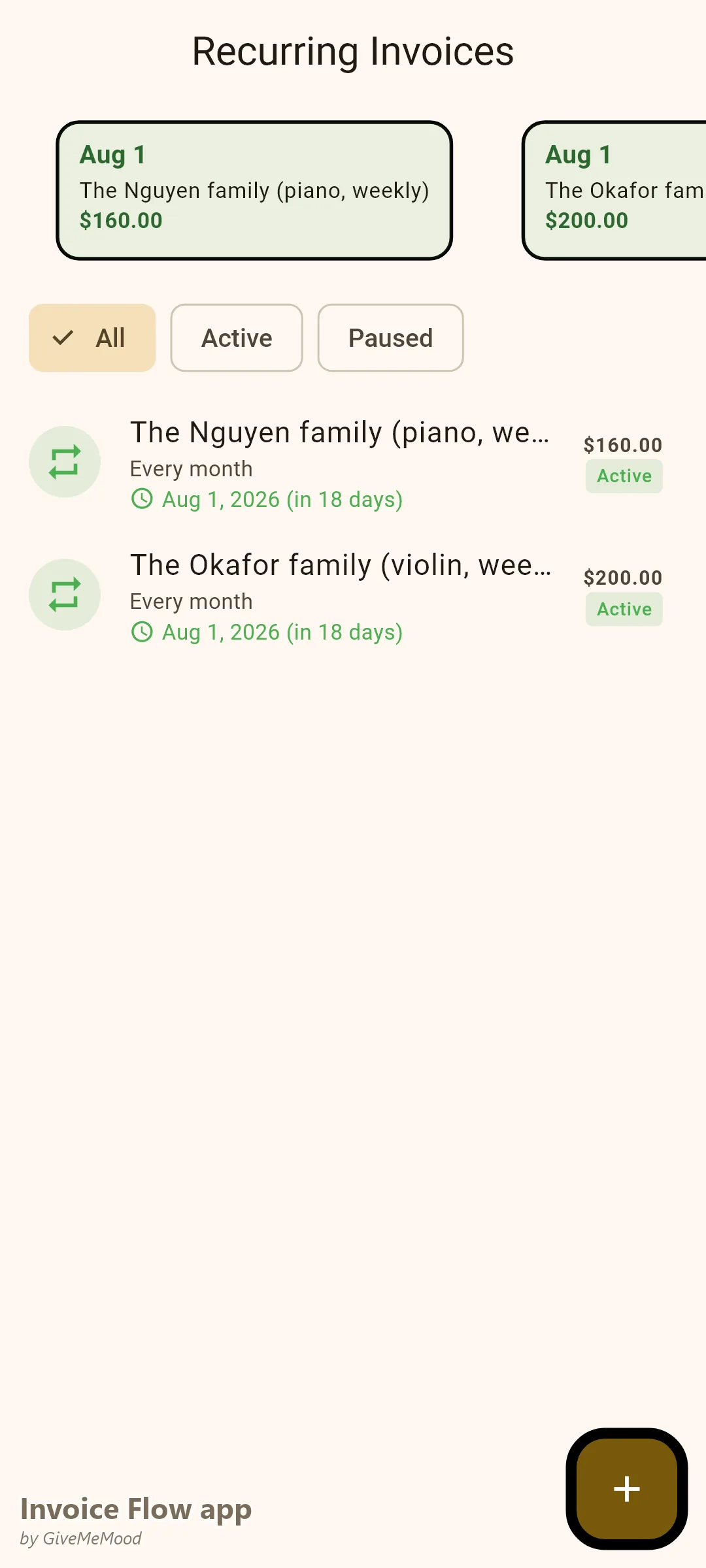
The core changes I made, implemented over about three months:
Monthly semester enrollment instead of monthly invoicing.
Instead of invoicing at the end of each month for lessons delivered, I moved to semester enrollment with payment at the start of each semester. My studio operates on two semesters: fall (September–December) and spring (January–May), with a summer session (June–August) for interested families.
“Piano Lessons — Fall Semester — [Student Name]: 30-minute lessons, weekly, September–December (16 weeks) Tuition: $72/lesson × 16 lessons: $1,152.00 Due by September 1, 2026. Included: Winter recital participation, practice materials packet.”
Semester billing eliminated the monthly invoicing cycle entirely for enrolled students. Families pay once per semester and show up consistently because they have already paid.
Group lesson packages.
I added group lessons as a revenue stream I had previously underutilized. Group lessons at $40/student per 60-minute session with groups of 3-5 students generated $120-$200 per session. I packaged them:
“Group Music Lessons — Fall Package — [Student Name]: Theory and ensemble group (5 students): 8 sessions × 60 minutes Group rate: $40/session × 8 sessions: $320.00 Start date: September 7, 2026”
Group packages billed at enrollment. No monthly invoicing.
Recital and event billing.
The 2022 recital cost me $840 out of pocket. Every subsequent recital has included a recital fee built into the semester invoice or billed separately for families who join mid-semester.
“Spring Recital Fee — [Student Name]: Venue, program printing, accompanist: included in fee Recital participation fee: $45.00 Recital date: May 18, 2027”
This fee covers venue and production costs. Families accept it because it is transparent and reasonable.
Summer intensive programs.
Summer is when independent music teachers lose students. I turned it into a growth opportunity with defined summer programs:
“Summer Music Program — [Student Name] — July 2026: Piano Camp — 2-week intensive: 5 days/week × 10 sessions × 45 minutes Includes: Theory workbook, performance recording session, final recital Program fee: $480.00 Deposit (50%): $240.00 due at enrollment Balance: $240.00 due June 30, 2026”
Summer program enrollment went from eleven students in 2022 to twenty-seven in 2025, almost entirely because the program had a defined structure and a clear invoice that families could budget for.
School Partnership Billing
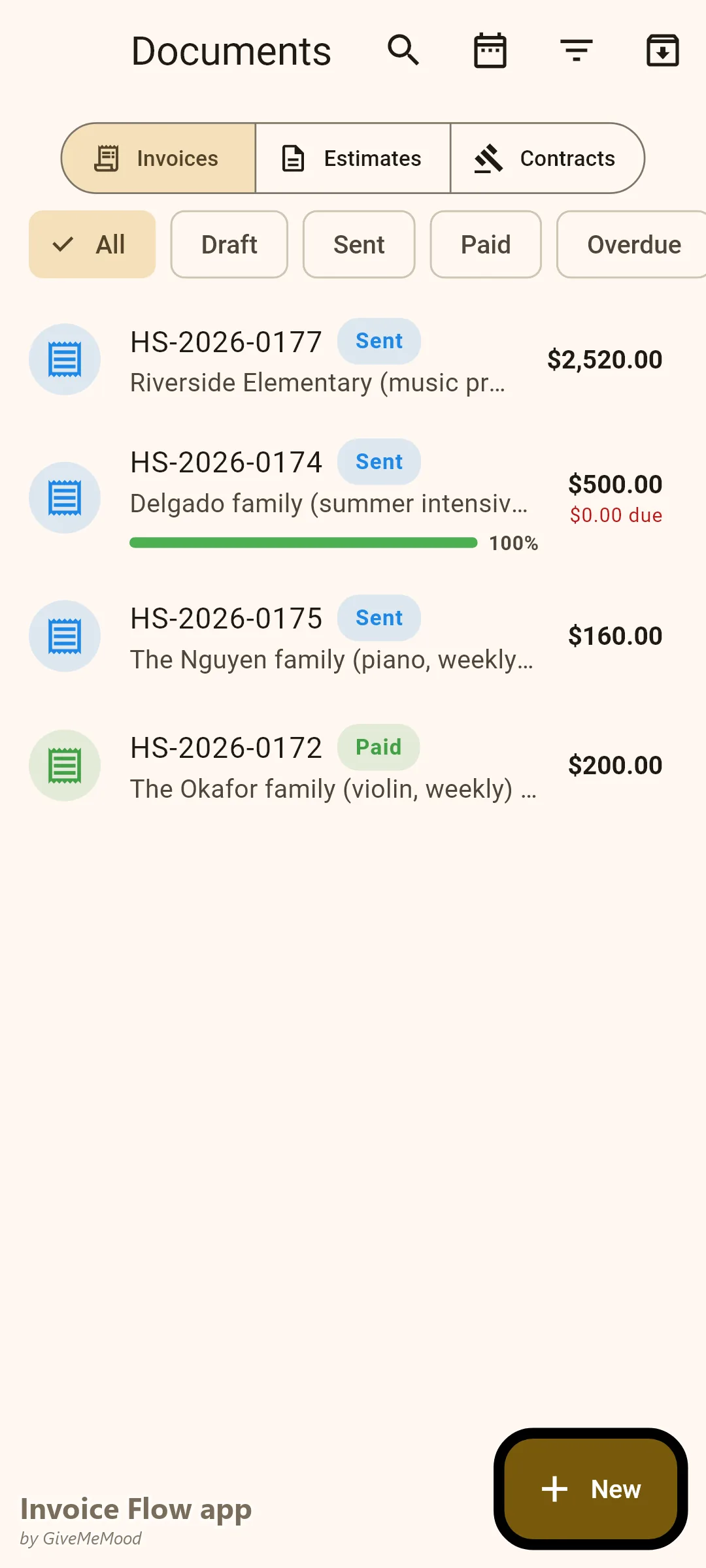
In 2023 I began a part-time relationship with a private elementary school as an after-school music instructor. The school has its own billing structure — they collect tuition from parents and pay me as a contracted vendor.
“Music Instruction Services — [School Name] — October 2026: After-school piano instruction: 3 days/week × 4 weeks Students: 8 enrolled Rate: $55/student/hour × 24 sessions (30 min each, 0.5 hr) = $55 × 0.5 × 24 × 8 = $5,280.00 PO Number: PO-2026-EXT-0291 Payment Terms: Net-30”
The school contract provides steady winter and spring income that bridges the summer enrollment gap.
The Studio at Year Three of the New Model
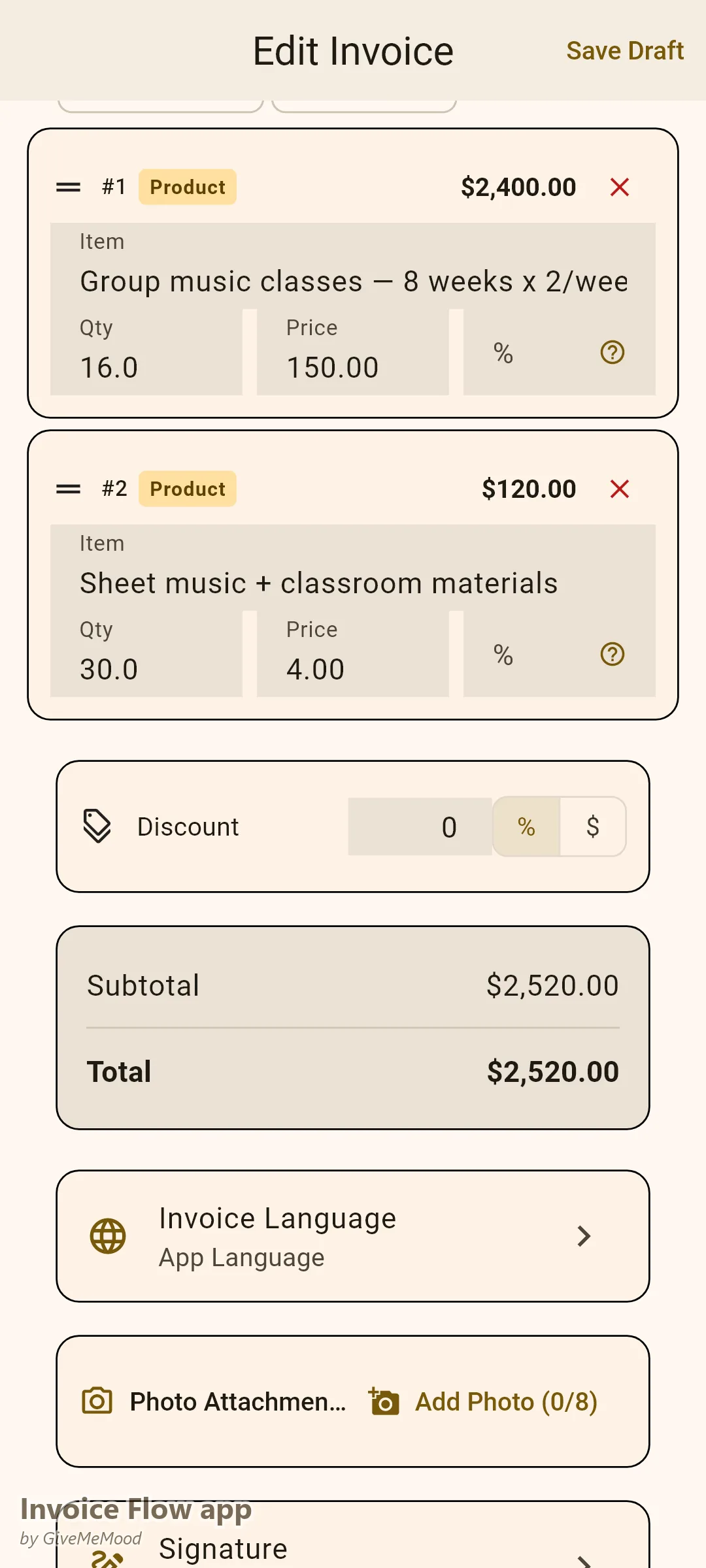
By 2025, the studio looked substantially different from 2022:
- Fall and spring enrollment: 34 students, all paying at semester start
- Summer program: 27 students enrolled
- 3 group lesson sections, averaging 4 students each
- After-school school contract: 8 students, net-30 institutional billing
My effective monthly income was no longer dependent on tracking down late payments from individual families. The studio operated on predictable, advance-payment billing. Administrative time dropped significantly.
The recital is now a highlight of each semester rather than a cost I absorb. It has become a marketing event — prospective families attend, hear current students perform, and enroll.
Download InvoiceFlow. Set up semester enrollment invoices. Build your summer program with defined pricing. Host a recital and charge for it.
Michael Torres is a piano and guitar instructor and music studio owner in Portland, Oregon, teaching students from beginner through advanced levels.